Hida: Takayama and Shirakawa-go
Takayama, in the mountains of Gifu Prefecture, is 2 h 20 from Nagoya on the Hida limited express, a little over 4 h from Tokyo, and 4 h 15 from Osaka by direct train. It has the Sanmachi merchant quarter and Takayama Jinya; Shirakawa-go, with its UNESCO-listed gassho-zukuri farmhouses, and the Shinhotaka Ropeway round off a stay. The festivals are held on 14-15 April and 9-10 October; average highs are 17 °C in April and 3 °C in January.
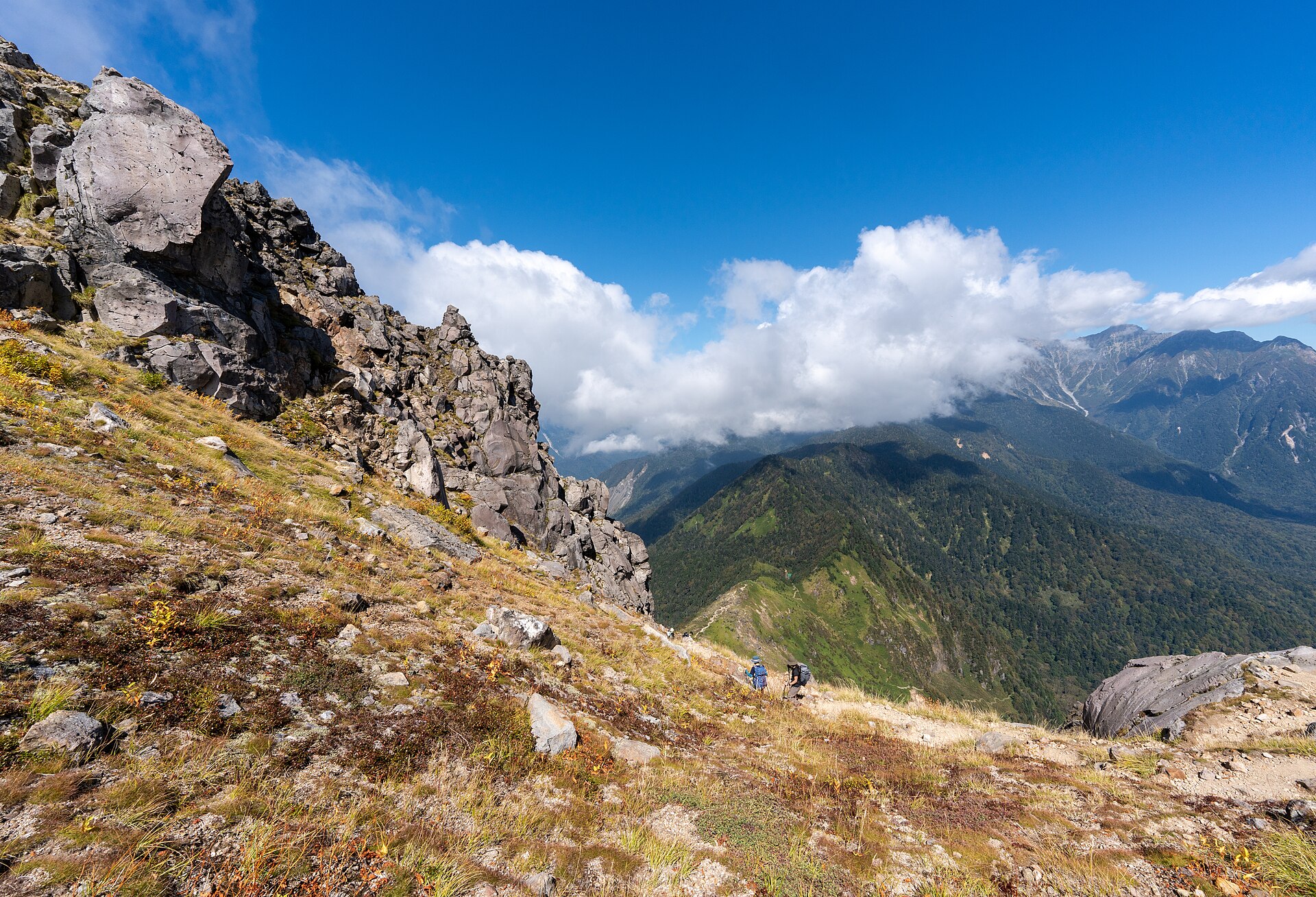
The Hida region, in the mountains of Gifu Prefecture, takes two or three nights around Takayama, which is 2 h 20 from Nagoya on the Hida limited express and 4 h 15 from Osaka by direct train. It brings together three landscapes: an old merchant town, Takayama, known for its two float festivals; Shirakawa-go, a village of thatched farmhouses inscribed as a UNESCO World Heritage Site in 1995; and the hot springs of Okuhida, at the foot of the Northern Alps, where a gondola climbs to 2,156 m. It suits a second trip to Japan, between Tokyo, Kanazawa and Kyoto, for couples and families looking for rural Japan and nights in a ryokan (traditional Japanese inn).
Takayama, a mountain merchant town
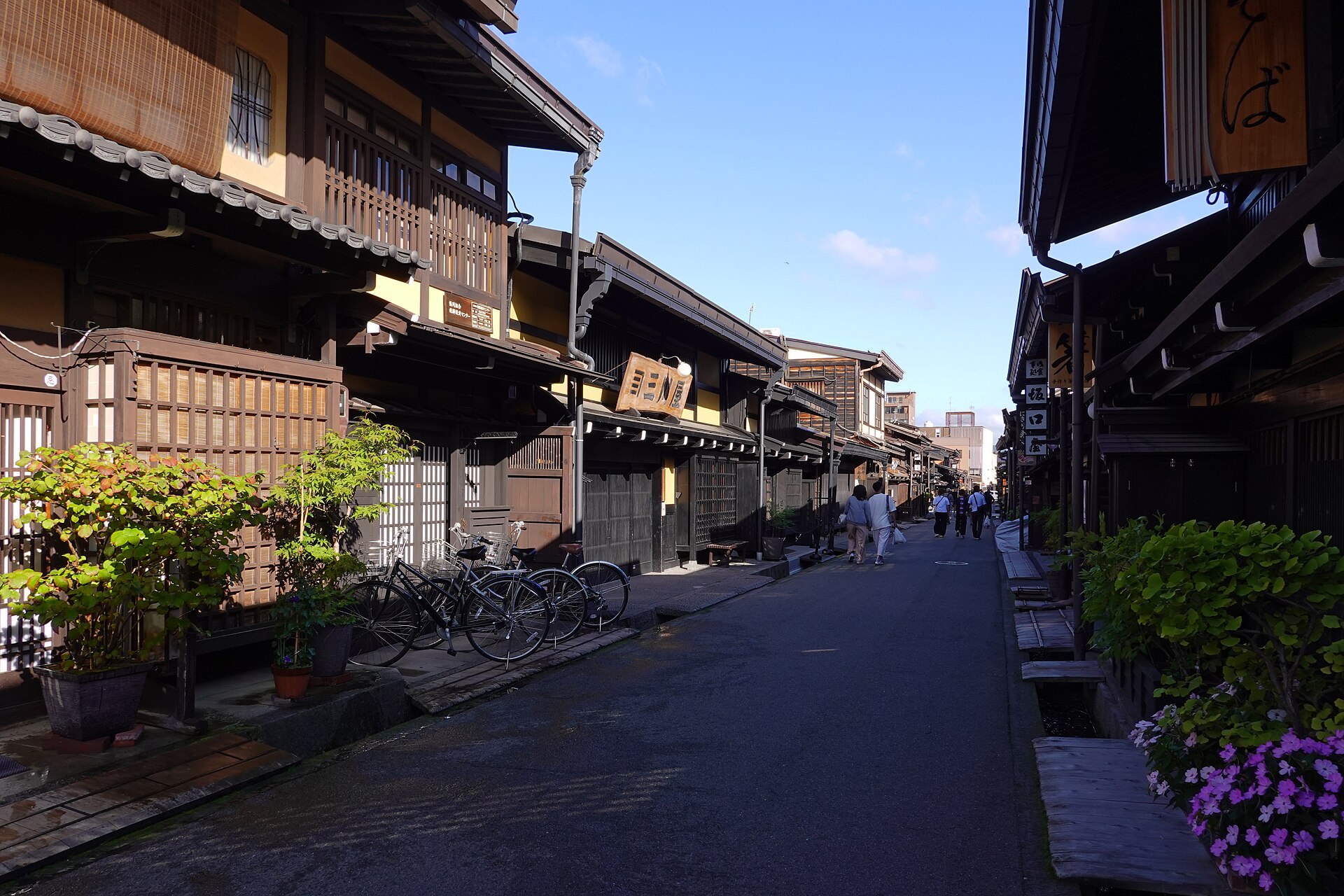
Sanmachi, the old town, is a protected former merchant quarter. Its townhouses have wooden-lattice fronts lined with channels of clear water; sake breweries are marked by a ball of cedar leaves hanging at the door. The quarter can be explored on foot in half a day.
Takayama Jinya was the local office of the shogunate, the military government of the Edo period. Visitors walk through tatami rooms (rice-straw mats) with shoes off; the building is unheated, which matters in winter. It opens from 8.45 am to 5 pm between April and October and from 8.45 am to 4.30 pm between November and March, and closes from 29 December to 3 January. Admission is 500 ¥ (about 3 €), free up to age 18.
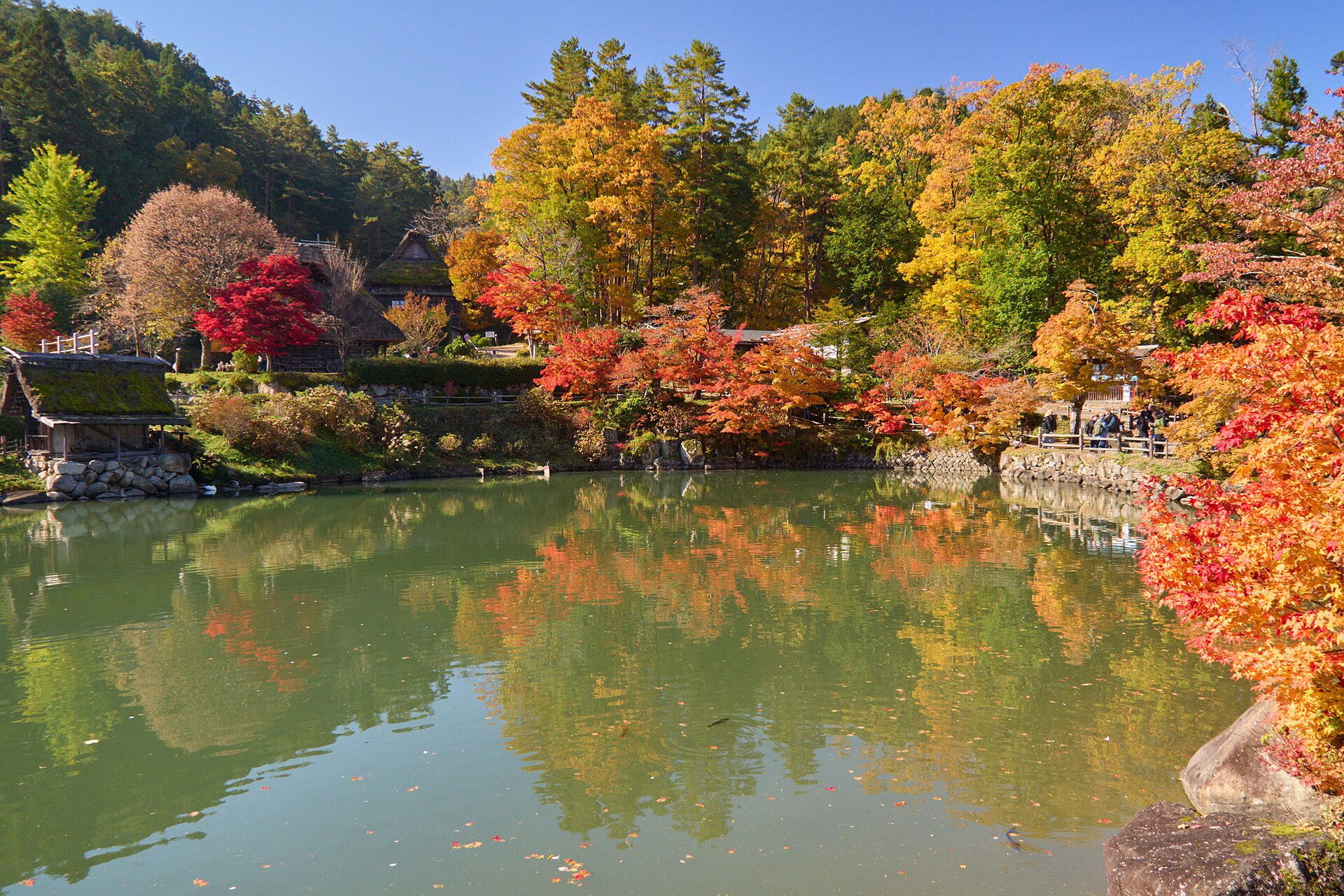
Hida no Sato, the Hida Folk Village, is an open-air museum of more than 30 buildings on about 99,000 m², including thatched farmhouses, with demonstrations of lacquer, weaving and dyeing. It opens daily from 8.30 am to 5 pm, for 700 ¥ (about 4 €), and makes a good introduction to the architecture of Shirakawa-go, especially with children.
All times on this page are local time.
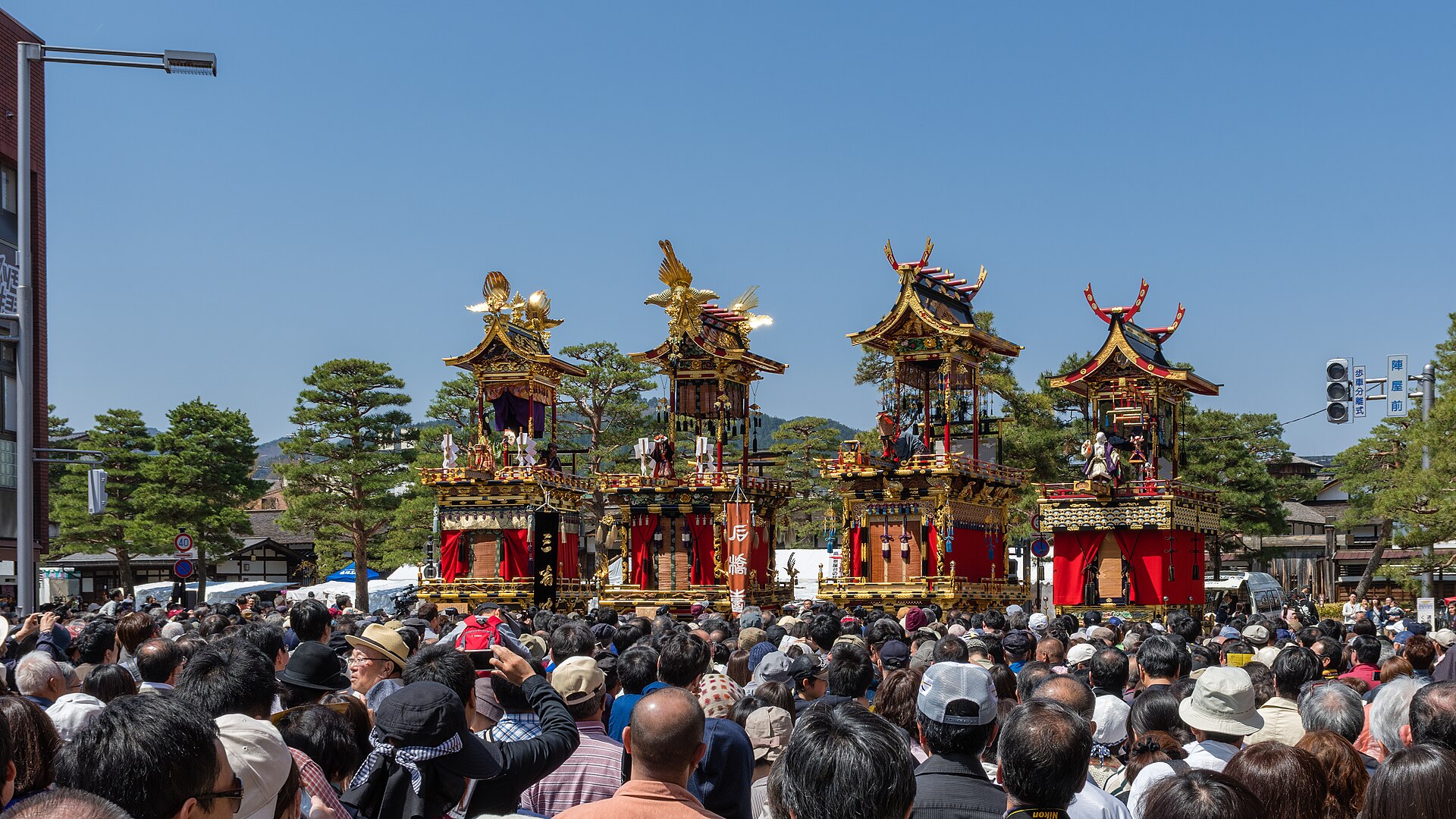
Takayama's two festivals
| Festival | Dates | Shrine | Floats |
|---|---|---|---|
| Sanno Matsuri, spring festival | 14 and 15 April | Hie | 12 |
| Hachiman Matsuri, autumn festival | 9 and 10 October | Sakurayama Hachimangu | 11 |
The dates are fixed each year, whatever the day of the week. Over these four days the town is in high demand: a trip built around a festival should be booked early, and the nearest hotel in the selection, Wanosato, lies outside town, in the Miya River valley.
Shirakawa-go, the village of thatched roofs
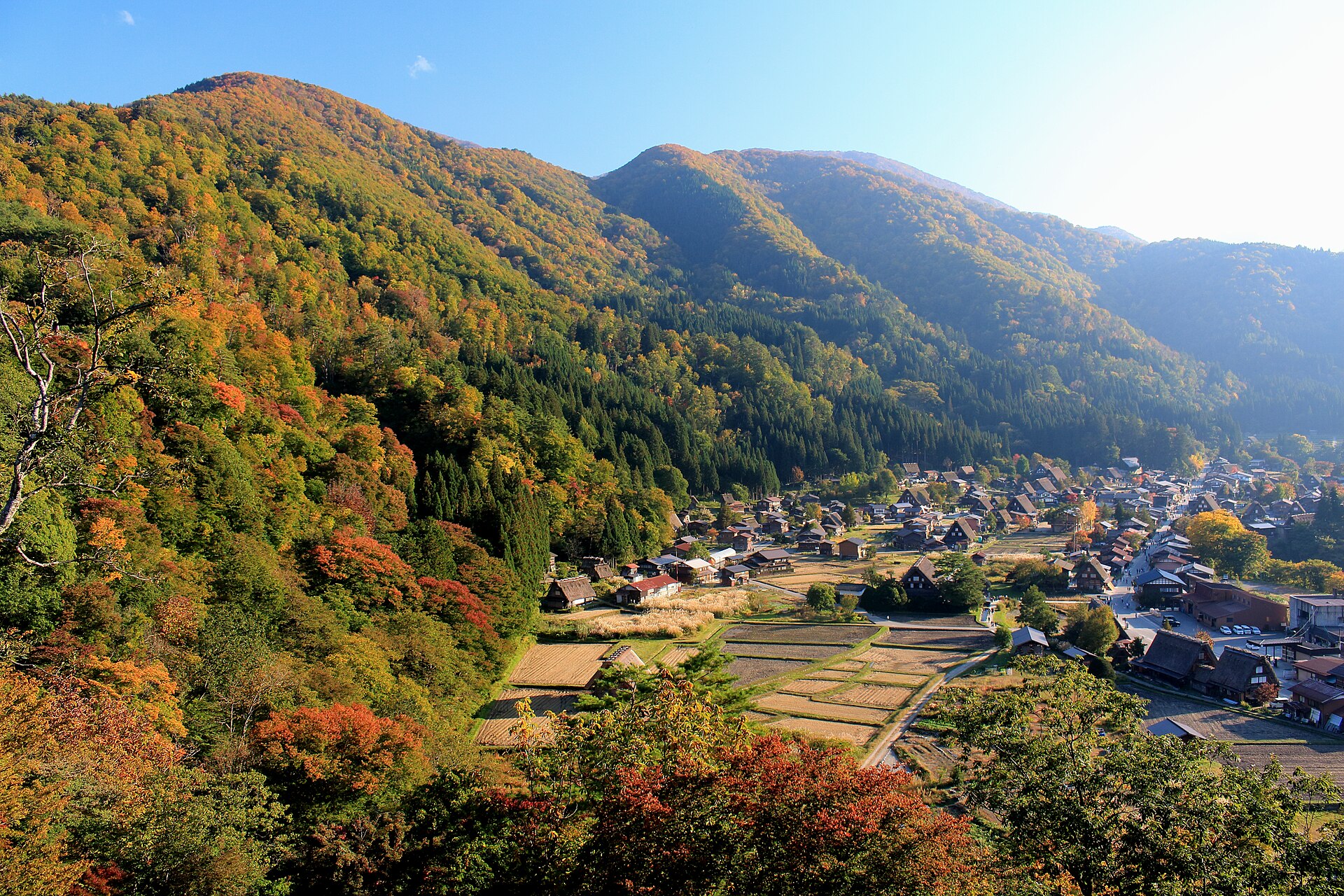
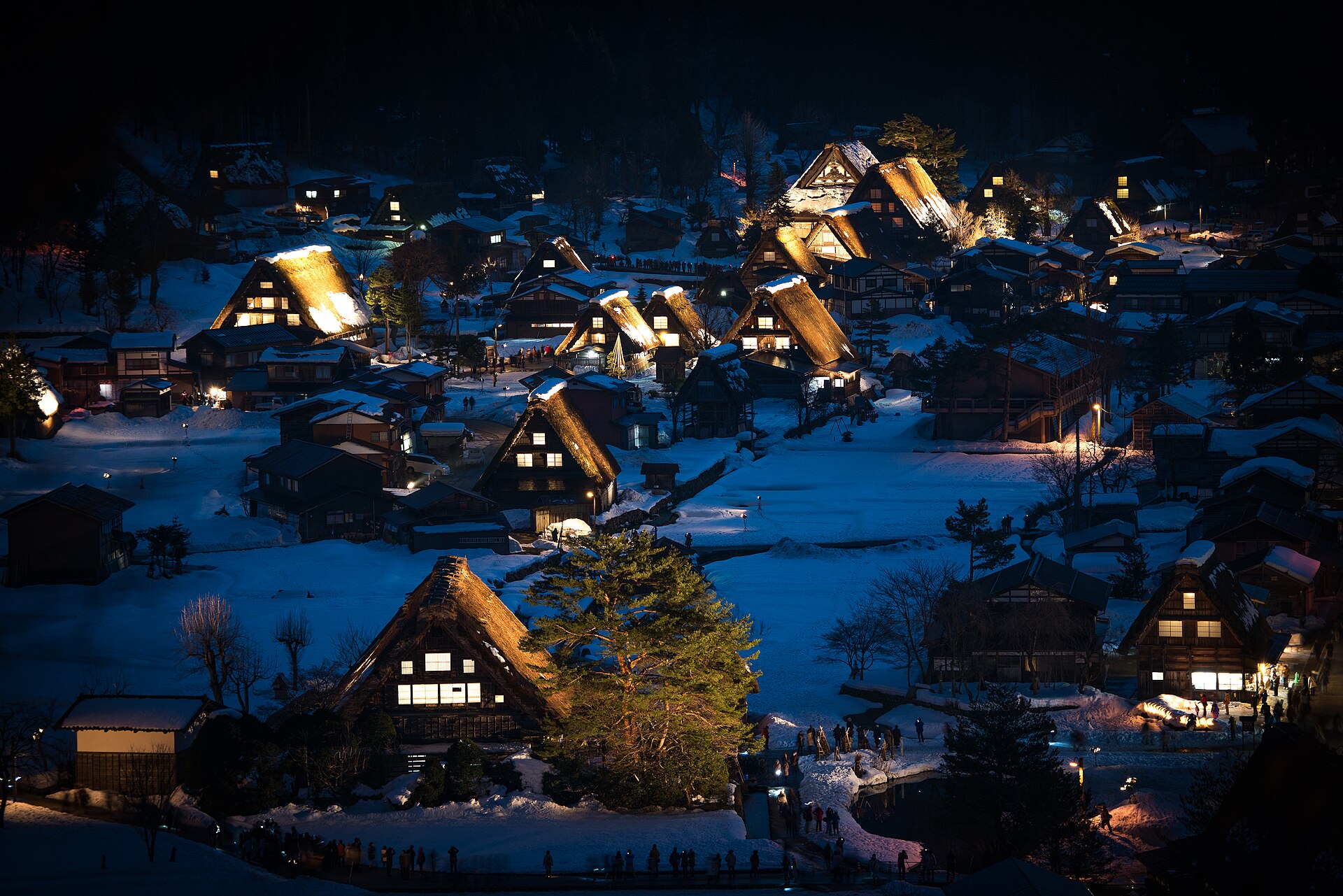
Shirakawa-go keeps more than 100 gassho-zukuri buildings, large farmhouses with steep thatched roofs. The village was inscribed as a UNESCO World Heritage Site in 1995. It is about 50 minutes by express bus from Takayama Station and 1 h 30 from Kanazawa Station, so it fits neatly between the two cities.
A few rules shape a visit:
- A night in a farmhouse. Rooms in the gassho-zukuri farmhouses offered through the tourist association are allocated by lottery. A night in the village shows it in the evening, after the day visitors have gone.
- Winter illumination. In 2027 the village is lit up on 11, 17, 24 and 31 January. Accommodation and parking are by reservation; the first round of car parking reservations, opened on 10 September, is sold out.
- Coaches. From 1 December 2026, coach parking at the main car park is by reservation.
Okuhida and the Shinhotaka Ropeway
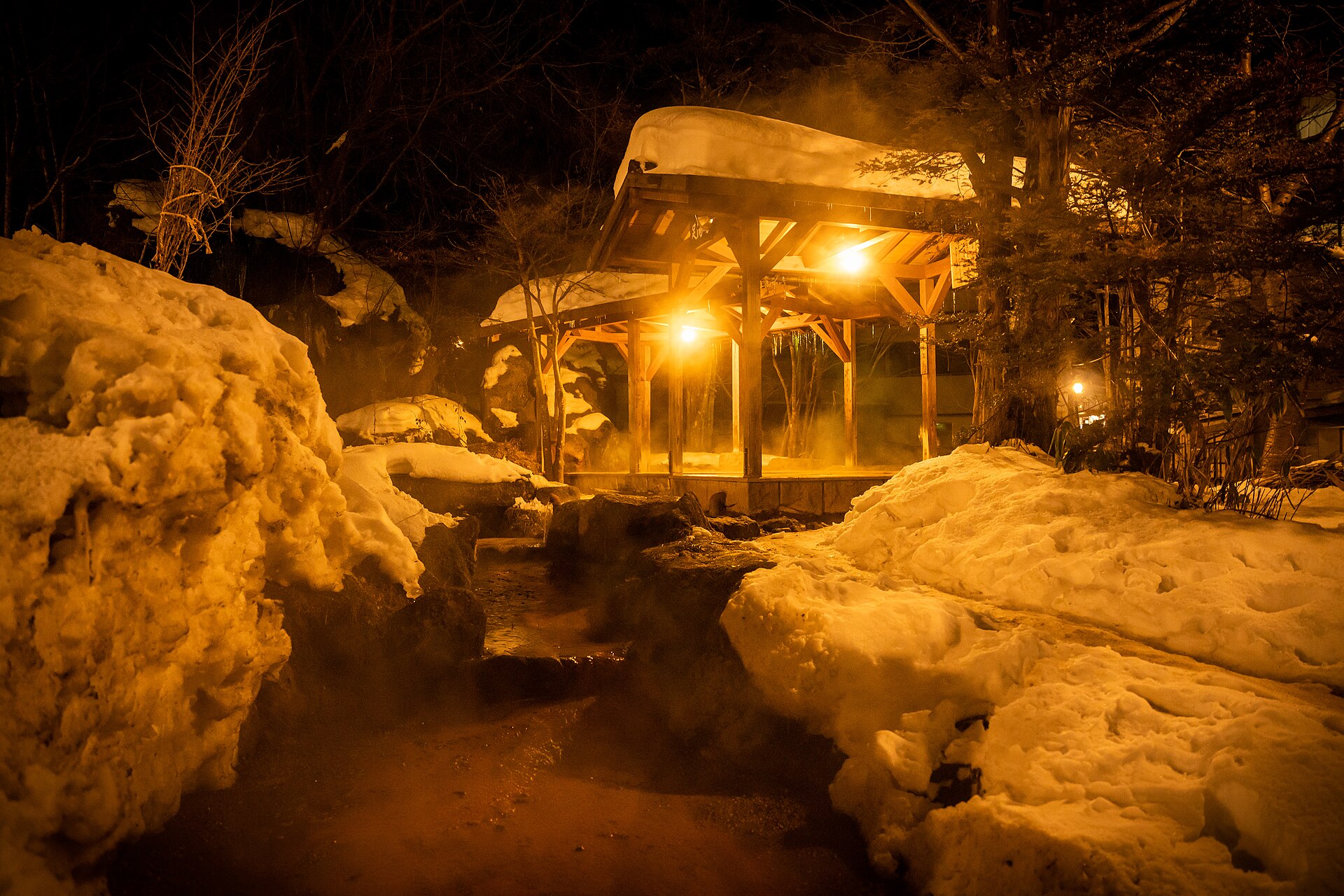
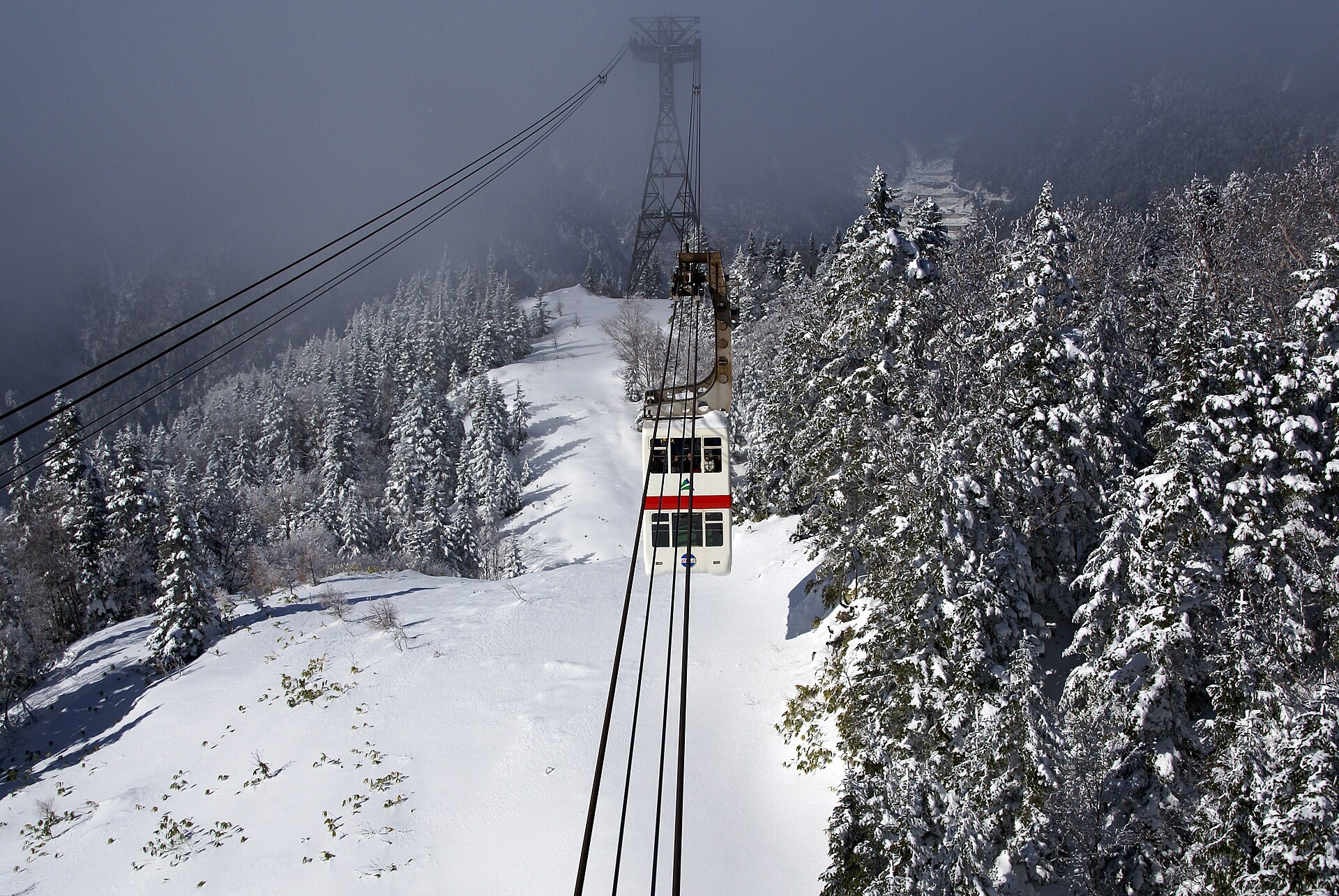
East of Takayama, Okuhida gathers hot-spring villages at the foot of the Northern Alps, among them Hirayu, at about 1,200 m, and Shinhotaka Onsen. From Shinhotaka Onsen, the Shinhotaka Ropeway climbs in two sections to 2,156 m, with double-decker cabins, the only ones of their kind in Japan. It runs all year, with a departure every 30 minutes; a return ticket costs 3,800 ¥ (about 22 €).
The baths of Okuhida are onsen, fed by natural hot springs. The guide to onsen, ryokan and etiquette in Japan explains how to bathe.
Getting around the region
| Journey | Mode | Time |
|---|---|---|
| Nagoya - Takayama | Hida limited express | 2 h 20 |
| Tokyo - Nagoya | Nozomi shinkansen | 1 h 40 |
| Osaka - Takayama | direct Hida limited express | about 4 h 15 |
| Toyama - Takayama | train | 1 h 30 |
| Matsumoto - Takayama | bus | 2 h 30 |
| Takayama - Shirakawa-go | express bus | about 50 min |
| Kanazawa - Shirakawa-go | express bus | about 1 h 30 |
| Takayama - Hirayu (Okuhida) | car | about 45 min |
The shinkansen is Japan's high-speed train. From Tokyo, the usual route goes through Nagoya, a little over 4 h in all. By car, Hirayu is about 90 minutes from Shirakawa-go, so the two can be combined in one day. The guide to trains and the Japan Rail Pass explains seat reservations.
Seasons: a mountain climate
The table of 1991-2020 normals from the JMA (Japan Meteorological Agency) shows a true mountain climate in Takayama. The average high is only 3.2 °C in January, 4.7 °C in February and 6.2 °C in December: the season of snow in Shirakawa-go and of the January illumination, when snow tyres are compulsory to reach Wanosato by car. Spring comes fast, from 10 °C in March to 17 °C in April, the month of the spring festival, and 23 °C in May. Summer stays bearable, with an average high of 31 °C in August, and cooler at altitude in Okuhida. Autumn drops from 26 °C in September to 20 °C in October, the month of the autumn festival, then 13 °C in November.
The JMA publishes no cherry blossom date for Takayama. The guide to seasons and cherry blossoms gives those of nearby cities.
Where to stay in Hida
Umika's selection includes two ryokans, one in the valley south of Takayama and one high up in Okuhida.
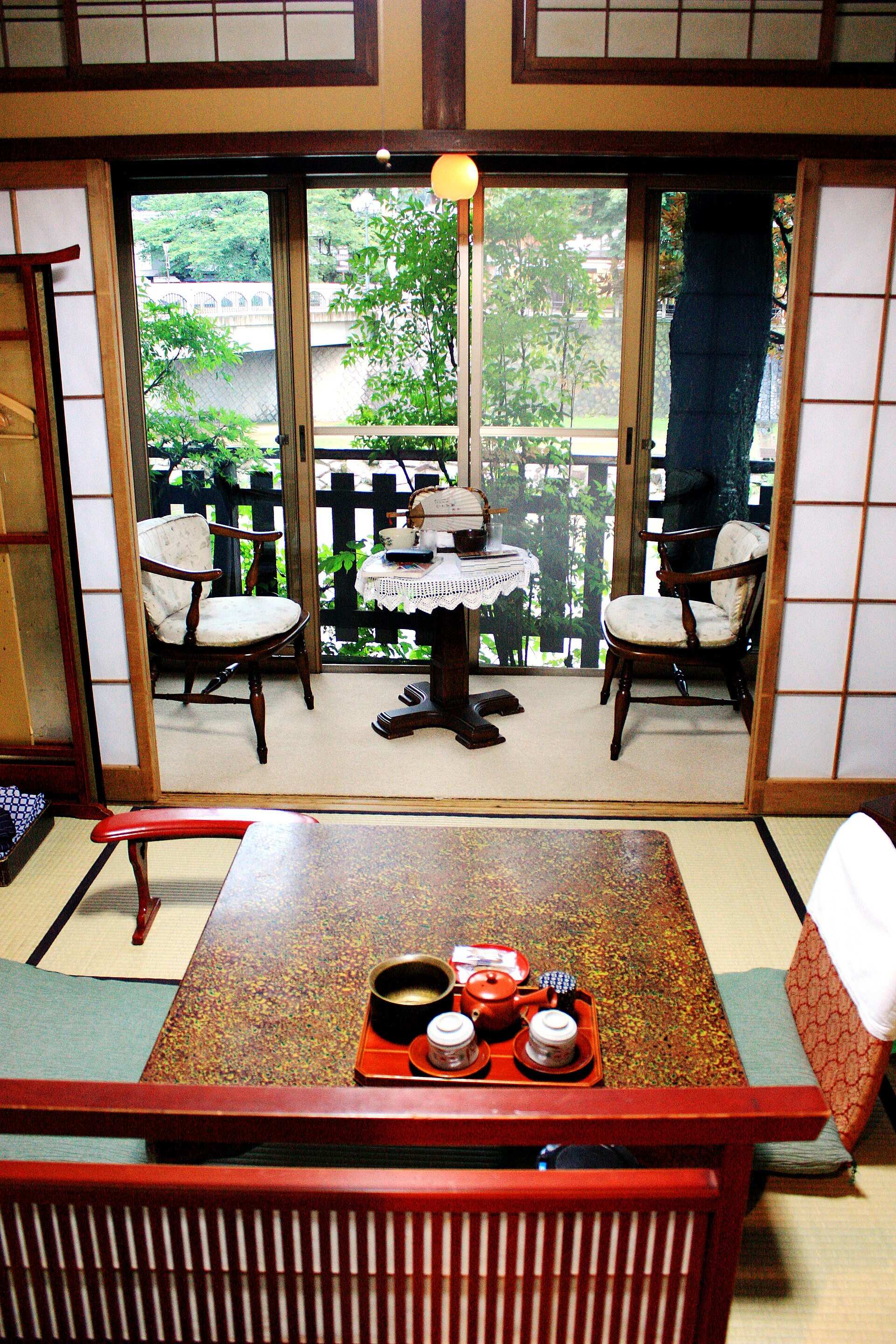
Wanosato, in Ichinomiya. On a 45,000 m² estate on the Miya River, facing Mount Norikura, it lets four villas, two of them in gassho-zukuri style and one a 120-year-old house with an irori, a sunken hearth in the floor, plus three suites in a 160-year-old farmhouse. It has shared hot-spring baths and serves kaiseki dinner (a Japanese multi-course meal). A shuttle links it to JR Takayama Station; by car, snow tyres are compulsory in winter. Children are welcome from primary-school age, in the villas.
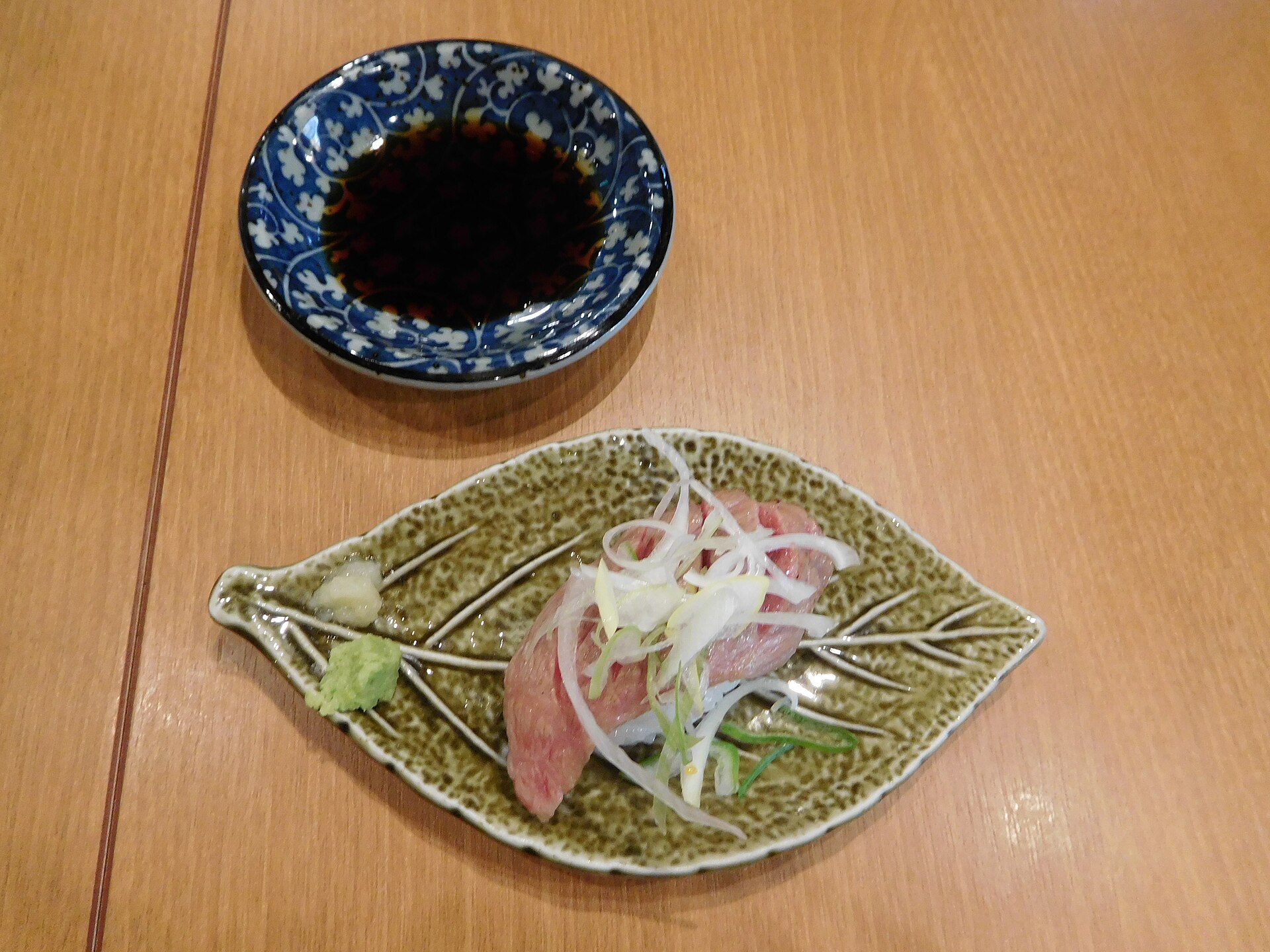
KAI Okuhida, in Hirayu. Opened on 5 September 2024 by Hoshino Resorts, this 49-room ryokan stands at about 1,200 m, 45 minutes by car from Takayama and a 4-minute walk from the Hirayu Onsen bus terminal. 28 rooms have a private open-air onsen bath; the shared baths have an indoor and an outdoor pool. Kaiseki dinner showcases Hida beef. Children are welcome, and it is the closest address to the Shinhotaka Ropeway.
The Kanazawa, Shirakawa-go and Takayama in 10 days itinerary includes two nights at Wanosato after Shirakawa-go, coming from Kanazawa.
What to see
- Takayama Jinya — former office of the shogunate's administration in Takayama, with tatami rooms; 8.45 am-5 pm April to October, 8.45 am-4.30 pm November to March, closed 29 December to 3 January; ¥500, free up to age 18; unheated building, shoes off at the entrance Takayama Jinya, informations pratiques
- Sanmachi old town — protected former merchant quarter: townhouses with wooden lattices, clear-water channels along the façades, sake breweries marked by a ball of cedar leaves Hida Takayama (office du tourisme de la ville de Takayama), Sanmachi
- Hida no Sato (Hida Folk Village) — open-air museum of more than 30 buildings on about 99,000 m², with thatched farmhouses; lacquer, weaving and dyeing demonstrations; daily 8.30 am-5 pm; ¥700 Hida Takayama (office du tourisme de la ville de Takayama), Hida no Sato
- Takayama festivals — Sanno Matsuri on 14 and 15 April (Hie Shrine, 12 floats) and Hachiman Matsuri on 9 and 10 October (Sakurayama Hachimangu Shrine, 11 floats) Hida Takayama (office du tourisme de la ville de Takayama), fêtes de Takayama
- Shirakawa-go — village inscribed as a UNESCO World Heritage Site in 1995, with more than 100 thatched gassho-zukuri buildings; winter illumination on 11, 17, 24 and 31 January 2027, with accommodation and parking by reservation; coach parking by reservation from 1 December 2026 Office du tourisme de Shirakawa-gō
- Shinhotaka Ropeway (Okuhida) — two gondola sections from Shinhotaka Onsen up to 2,156 m, with Japan's only double-decker cabins; open all year, departures every 30 min; return ticket ¥3,800 Shinhotaka Ropeway, tarifs
When to go
Climate in Takayama
| Jan | Feb | Mar | Apr | May | Jun | Jul | Aug | Sep | Oct | Nov | Dec | |
|---|---|---|---|---|---|---|---|---|---|---|---|---|
| Max. (°C) | 3.2 | 4.7 | 9.8 | 17.0 | 22.9 | 26.1 | 29.5 | 31.0 | 26.1 | 19.9 | 13.1 | 6.2 |
Source: JMA (agence météo japonaise), normales 1991-2020 de la station de Takayama (47617) — 1991-2020, accessed 30 October 2026
Getting there
- From Nagoya: Hida limited express to Takayama, 2 h 20; from Tokyo, Nozomi Shinkansen to Nagoya (1 h 40), then the Hida express Hida Takayama (office du tourisme de la ville de Takayama), accès
- From Osaka: direct Hida limited express to Takayama, about 4 h 15 Hida Takayama (office du tourisme de la ville de Takayama), accès
- From Kanazawa: express bus to Takayama, about 2 h 15 Hida Takayama (office du tourisme de la ville de Takayama), accès
Chosen activities
- Shinhotaka Ropeway gondola ride, return trip up to 2,156 m — varies · from 22 € per person
Public price collected on: Shinhotaka Ropeway, tarifs — accessed 30 October 2026
- Night in a gassho-zukuri farmhouse in Shirakawa-go, rooms allocated by lottery by the tourist association — one night
Best months to go
Itineraries through this region
- Tokyo, Toranomon · 2 nights
- Kanazawa · 3 nights
- Hida, Takayama (via Shirakawa-go) · 2 nights
- Kyoto, Higashiyama · 2 nights
Hotels chosen in the region
| Hotel | Category | Suits | Guest rating | Indicative price |
|---|---|---|---|---|
| KAI Okuhida | KAI hot spring ryokan in the Northern Alps, 49 rooms, opened in 2024 | Onsen and hot springs, Food and gastronomy, Hiking and ancient trails, Villages and countryside, Skiing and snow, Family, Ryokans | 4,2/5 (Google) | from 281 € per night |
| Wanosato | Mountain ryokan, villas and suites in traditional Hida houses on the Miya River | Onsen and hot springs, Food and gastronomy, Villages and countryside, Ryokans | 4,7/5 (Google) | from 695 € per night |
Read next
- Onsen, ryokan and etiquette in Japan: bathing, tattoos, temples and dining
- Money in Japan: yen, cash machines, tax-free shopping and accommodation taxes
- When to go to Japan: cherry blossoms, rainy season, typhoons and autumn leaves
- Trains in Japan: shinkansen, Japan Rail Pass, seat reservations and IC cards
- Kanazawa, Shirakawa-go and Takayama in 10 days
- Japan entry requirements: passport, Visit Japan Web, medicines and customs
Frequently asked questions
How many days should you spend in Takayama and Shirakawa-go?
Two or three nights: one day for Sanmachi, Takayama Jinya and Hida no Sato, half a day for Shirakawa-go, 50 minutes away by bus, and a day in Okuhida for the baths and the Shinhotaka Ropeway.
How do you get from Tokyo to Takayama?
Take the Nozomi shinkansen to Nagoya, 1 h 40, then the Hida limited express to Takayama, 2 h 20: a little over 4 h in total. Another route goes via Kanazawa, then Shirakawa-go by bus.
When are the Takayama festivals?
The spring festival, Sanno Matsuri, is held every year on 14 and 15 April, with 12 floats, at Hie Shrine. The autumn festival, Hachiman Matsuri, takes place on 9 and 10 October, with 11 floats, at Sakurayama Hachimangu Shrine.
Can you stay overnight in Shirakawa-go?
Yes, in some of the village's gassho-zukuri farmhouses. Rooms offered through the tourist association are allocated by lottery, especially for the winter illumination on 11, 17, 24 and 31 January 2027.
Is Takayama very cold in winter?
Yes: the average January high is 3.2 °C according to the Japan Meteorological Agency's 1991-2020 normals. Takayama Jinya is unheated, and snow tyres are compulsory to reach some hotels by car.
Which ryokans should you choose in Hida?
Umika selects Wanosato, villas and suites in old houses on the Miya River south of Takayama, and KAI Okuhida, 49 rooms in Hirayu, 28 of them with a private open-air onsen bath, opened in 2024.
A travel advisor replies by email. Free, no commitment.