Kanazawa and Kaga Onsen
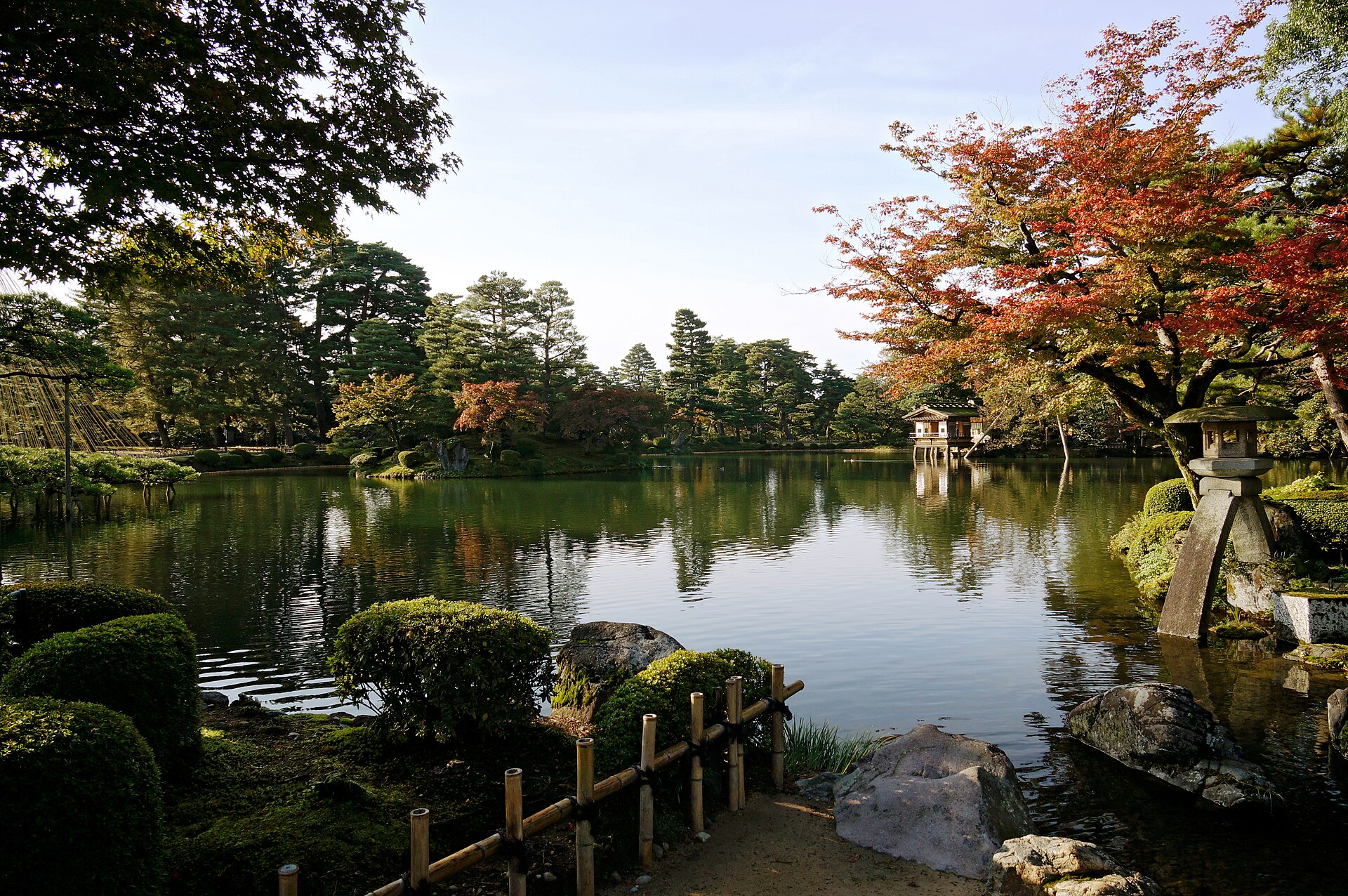
Kanazawa, on the Sea of Japan coast, is about 2 h 30 from Tokyo by Hokuriku Shinkansen and 2 h from Kyoto or Osaka, with a change at Tsuruga. It has Kenrokuen Garden and its teahouse and samurai districts; further south lie the hot-spring villages of Yamashiro and Yamanaka. Spring and autumn are the mildest seasons, with average highs of 17 °C in April and 22 °C in October.
Kanazawa, a city on the Sea of Japan coast, is about 2 h 30 from Tokyo on the Hokuriku Shinkansen (high-speed train) and 2 h from Kyoto or Osaka; two or three nights are enough, often followed by a night in the hot-spring villages of Kaga, further south. Visitors come for Kenrokuen Garden, for the teahouse streets where geiko (traditional entertainers, known elsewhere as geisha) still perform, for the booby-trapped Myoryu-ji temple and for gold-leaf crafts. In Kaga, Yamashiro Onsen and Yamanaka Onsen keep their ryokans (traditional Japanese inns) and their hot-spring baths, the onsen. It is a stop for travellers who have already seen Kyoto or who want a quieter Japan, as a couple or as a family.
Two stops in one
The region splits into two quite different stays.
| Kanazawa | Kaga Onsen | |
|---|---|---|
| What you do | gardens, old districts, museums, crafts | bathing, a walk along the gorge, dinner at the ryokan |
| Suggested stay | two or three nights | one or two nights |
| Access | Kanazawa Station, end of the Hokuriku Shinkansen | Kaga-Onsen Station, 15 min from Kanazawa by shinkansen, then 10 min by taxi |
| Hotel in the selection | Kinjohro | Beniya Mukayu, KAI Kaga |
The simplest order is Kanazawa first and Kaga last, before taking the train on to Kyoto or towards Takayama.
Kenrokuen, from dawn to dusk
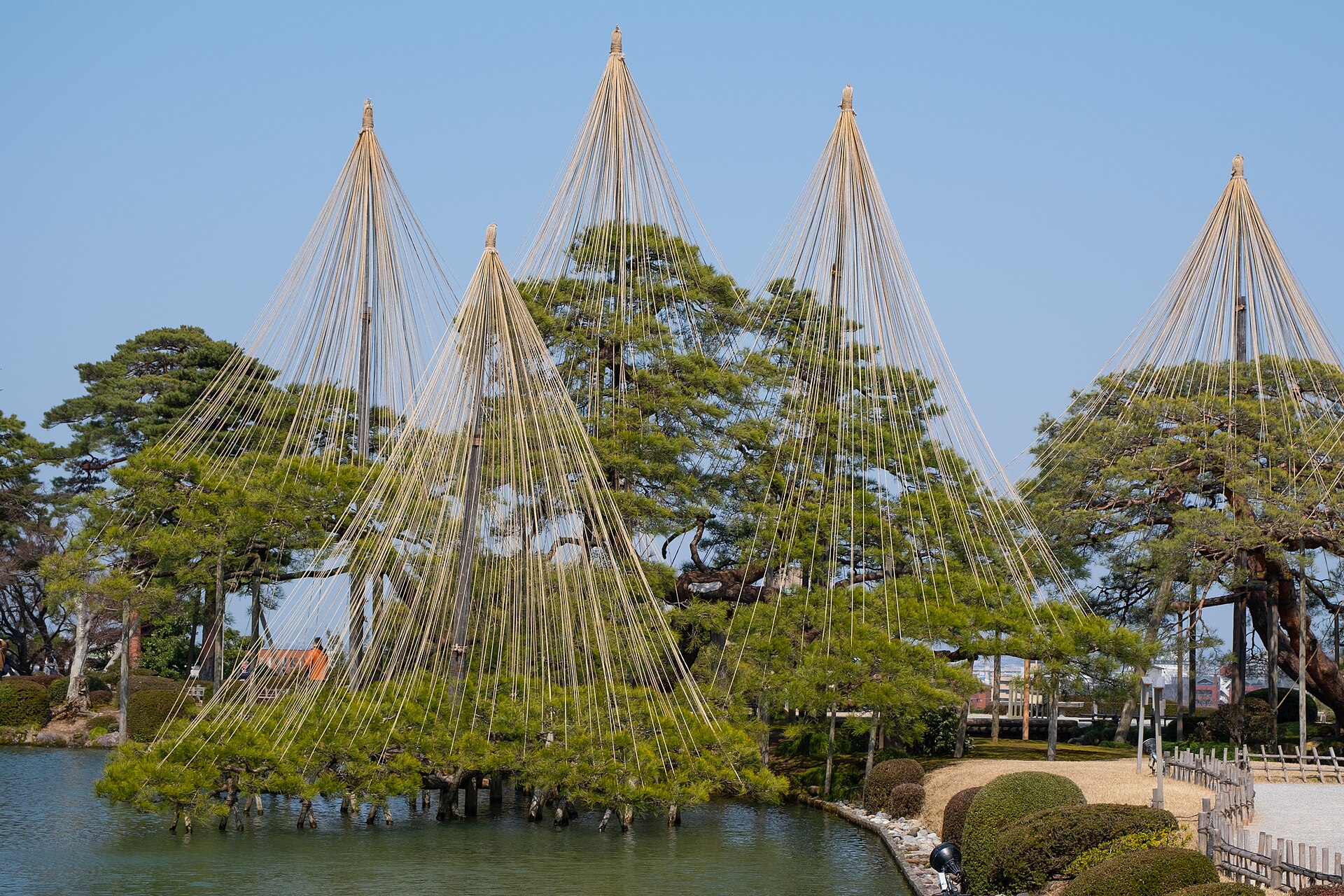
Kenrokuen Garden, next to the castle park, opens every day, from 7 am to 6 pm between 1 March and 15 October and from 8 am to 5 pm between 16 October and the end of February, last entry 30 minutes before closing. Adult admission is 320 ¥ (about 2 €).
The garden can also be visited free early in the morning, through the Hasuike-mon and Zuijinzaka gates only. Early opening starts at 4 am from April to August, 5 am in March and from September to October, and 6 am from November to February; visitors must be inside before this window ends, 15 minutes before paid opening.
The garden also opens in the evening, lit up, during the cherry blossom and autumn foliage seasons; Ishikawa Prefecture announces the dates each year. All times on this page are local time.
Higashi Chaya, Nagamachi and the Ninja Temple
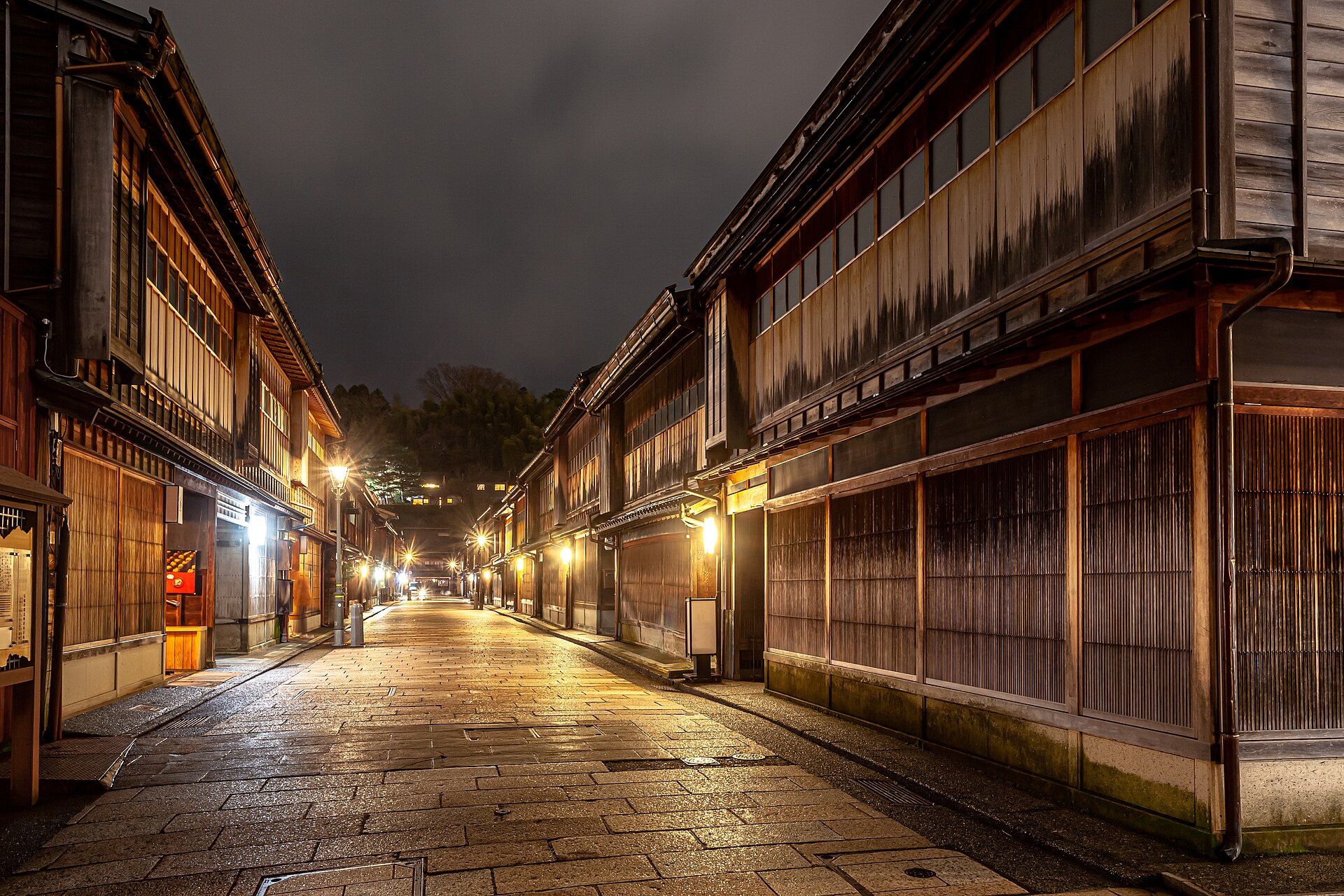
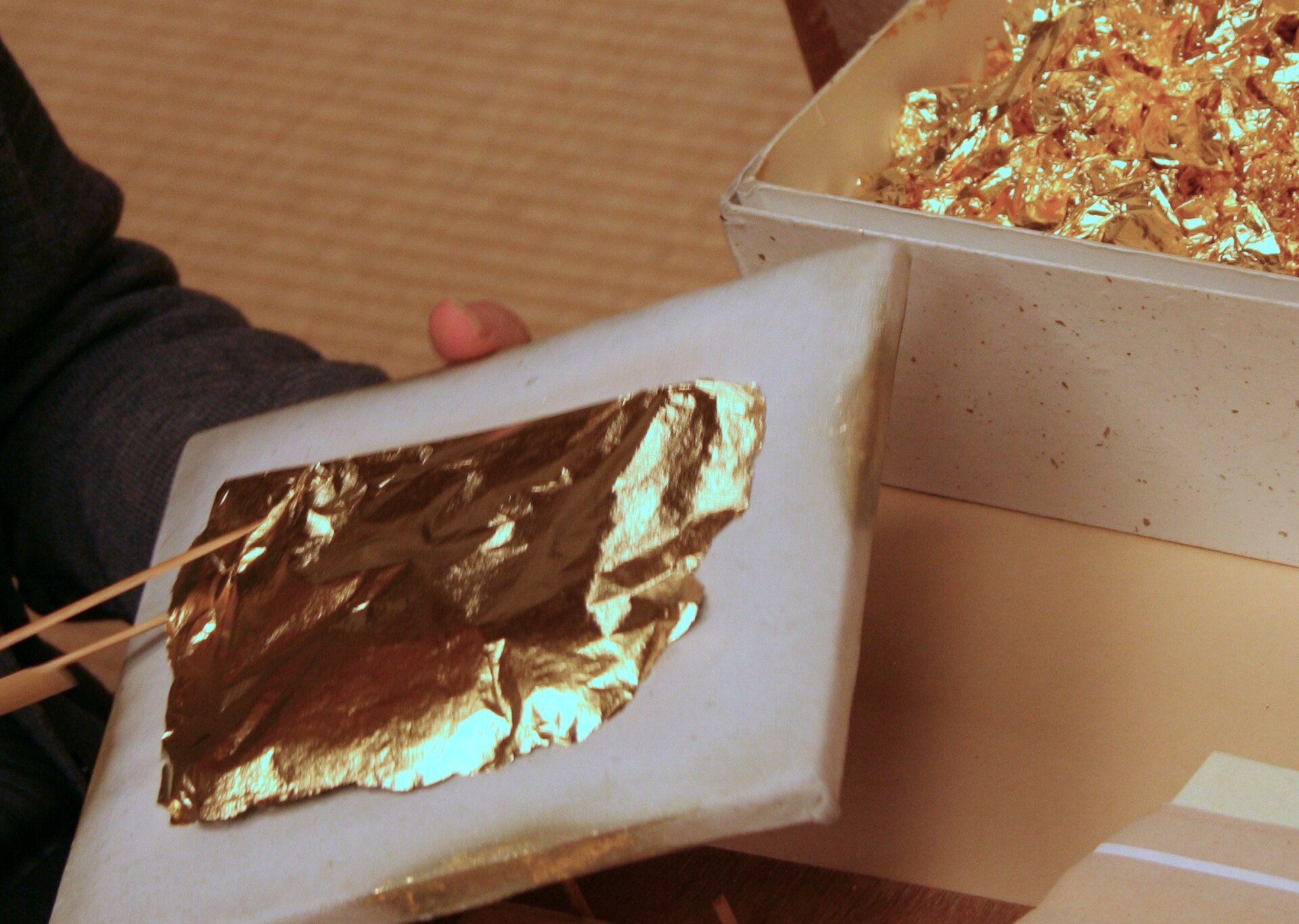
Higashi Chaya is the district of chaya, the wooden teahouses where geiko entertain their guests. Its streets also have shops selling gold-leaf objects, or kinpaku, the city's speciality, and the Yasue Gold Leaf Museum is close by. On Saturdays from May 2026 to March 2027, a geiko performance of about an hour, with tea and sweets, is held in a teahouse in one of the three districts, Higashi, Nishi or Kazue-machi, giving visitors a chance to see their dance and music.
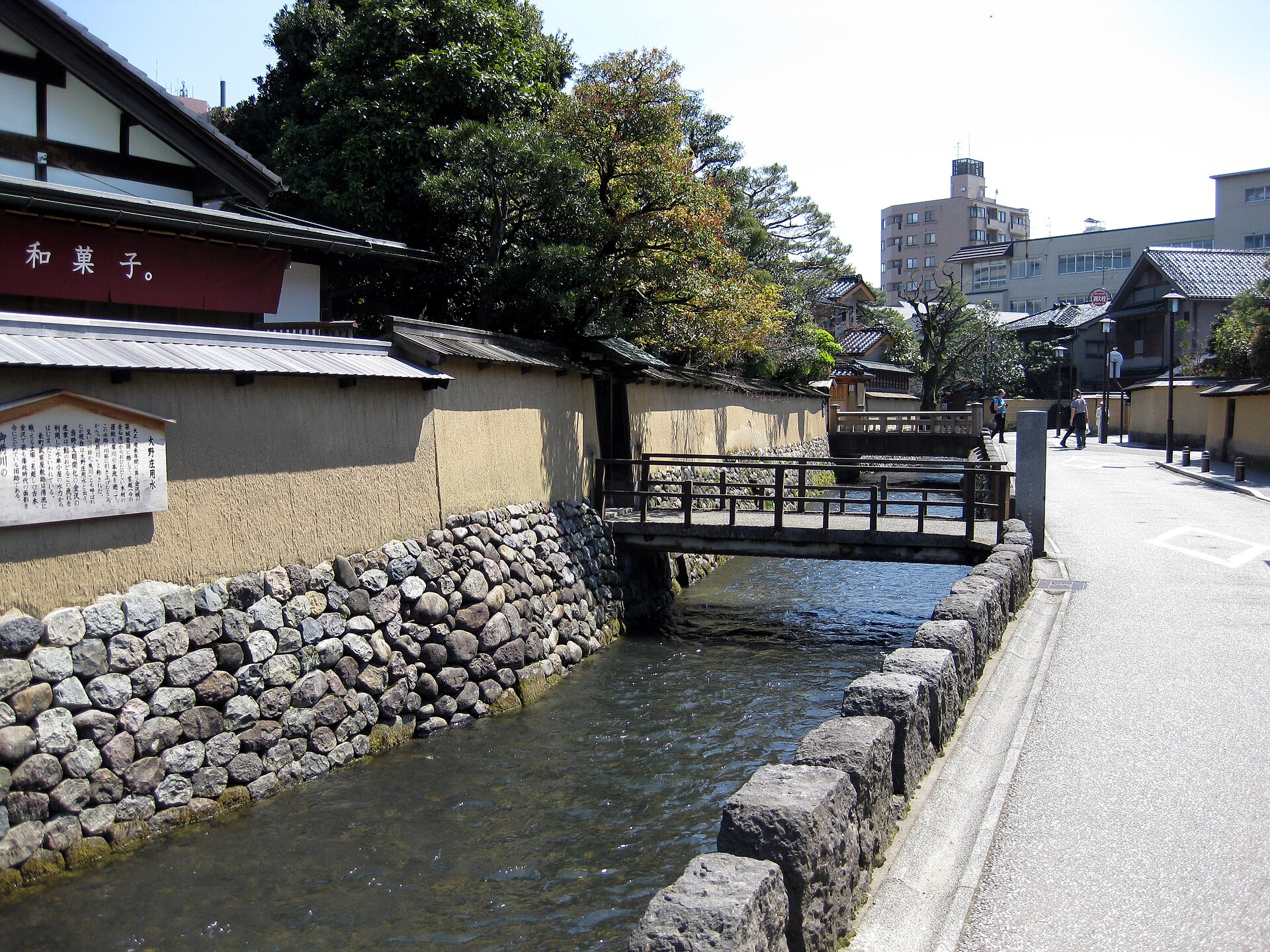
Nagamachi, the former samurai quarter, lies near the castle park. The Nomura samurai house is open to visitors.
Myoryu-ji, nicknamed the "Ninja Temple", was founded in 1643 by the Maeda family as a defensive outpost. It has two storeys seen from outside and four inside, with trapdoors, hidden rooms and secret stairways. Visits are guided only, with booking required, from 9 am to 4 pm, for 1,200 ¥ (about 7 €).
Museums and the tea ceremony
The 21st Century Museum of Contemporary Art opened in 2004; its Swimming Pool work is viewed by reservation. It will close from 6 May 2027 until March 2028, the planned reopening date: a trip to Kanazawa during that period will go without it.
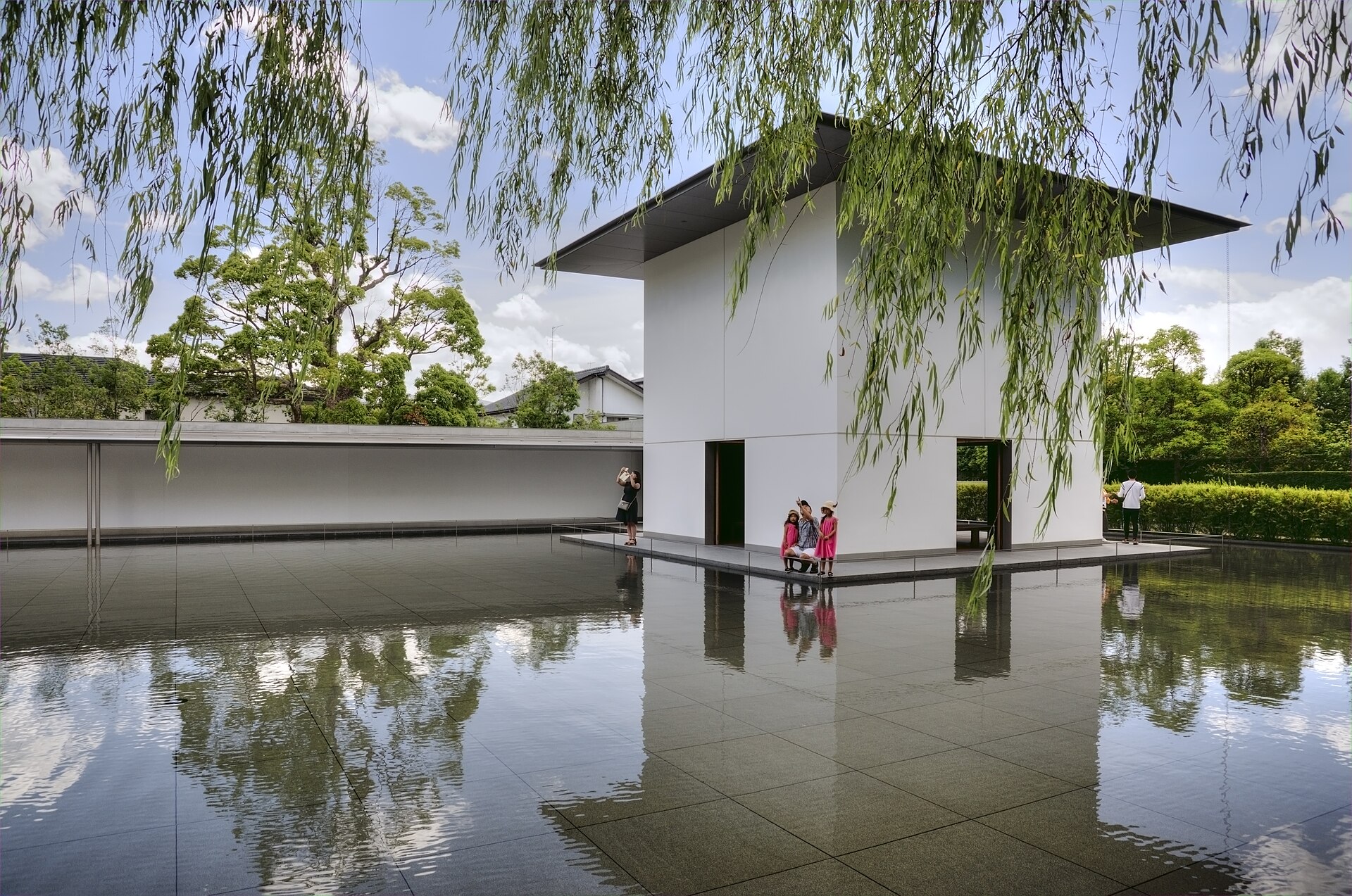
The D. T. Suzuki Museum, designed by architect Yoshio Taniguchi, is devoted to the Zen Buddhist thinker. It opens from 9.30 am to 5 pm, except on Mondays, for 310 ¥ (about 2 €).
At Gyokusen-en Garden, the Saisetsu-tei teahouse offers a tea ceremony for 5,000 ¥ (about 29 €) per adult, garden admission included, to be booked at least three days ahead: you watch the first bowl being prepared, then make the second yourself. The garden opens from 9 am to 5 pm, 10 am to 4 pm in December; it is closed on Wednesdays and from 25 December to the end of February.
The hot springs of Kaga: Yamashiro and Yamanaka
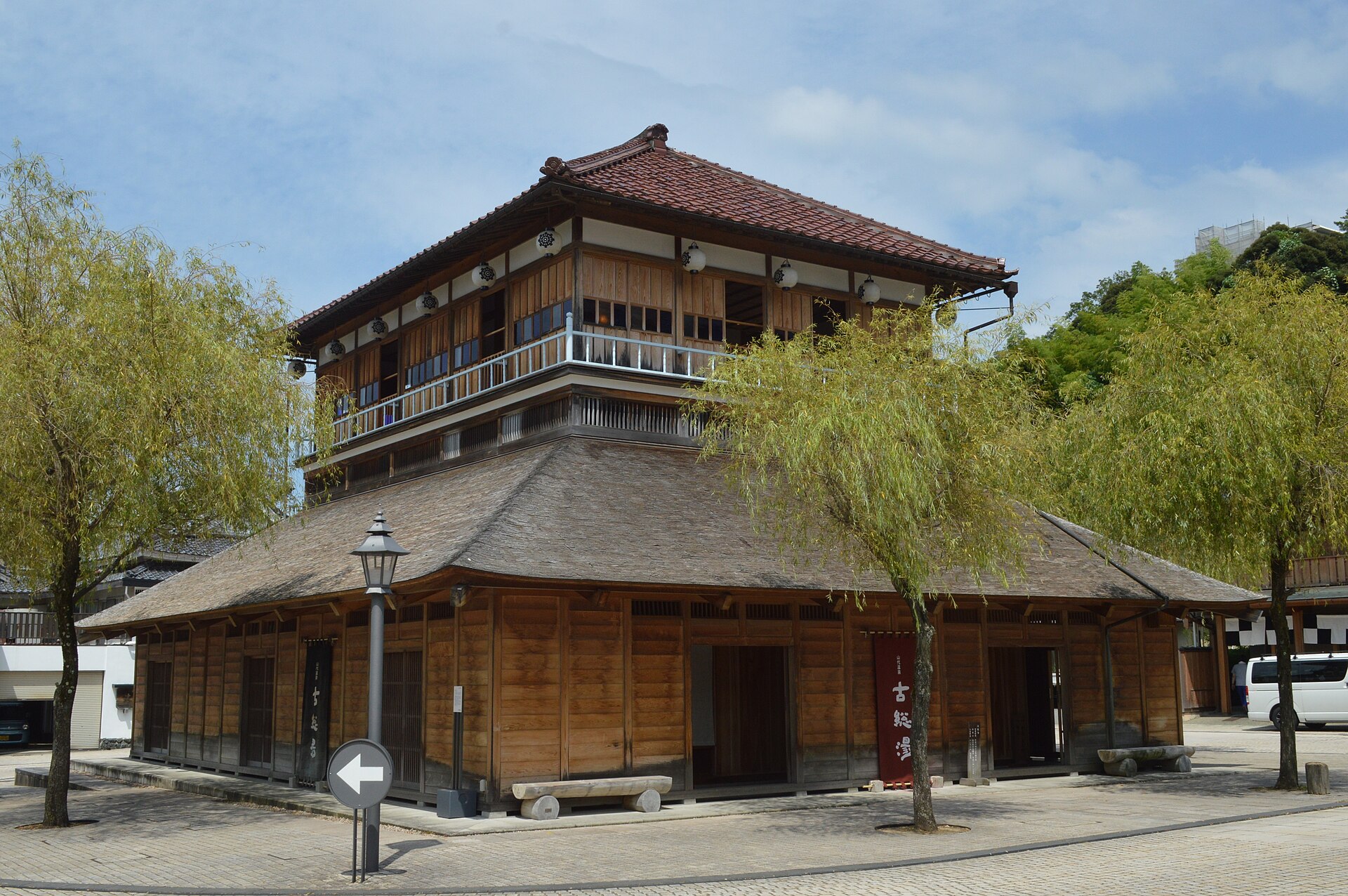
Yamashiro Onsen is a hot-spring village whose spring is said to have been found more than 1,300 years ago. At its centre, the Ko-Soyu public bath recreates an old-style bathhouse, with tiles of Kutani porcelain, the painted ceramics of the area, and no showers. Two ryokans from Umika's selection are in Yamashiro.
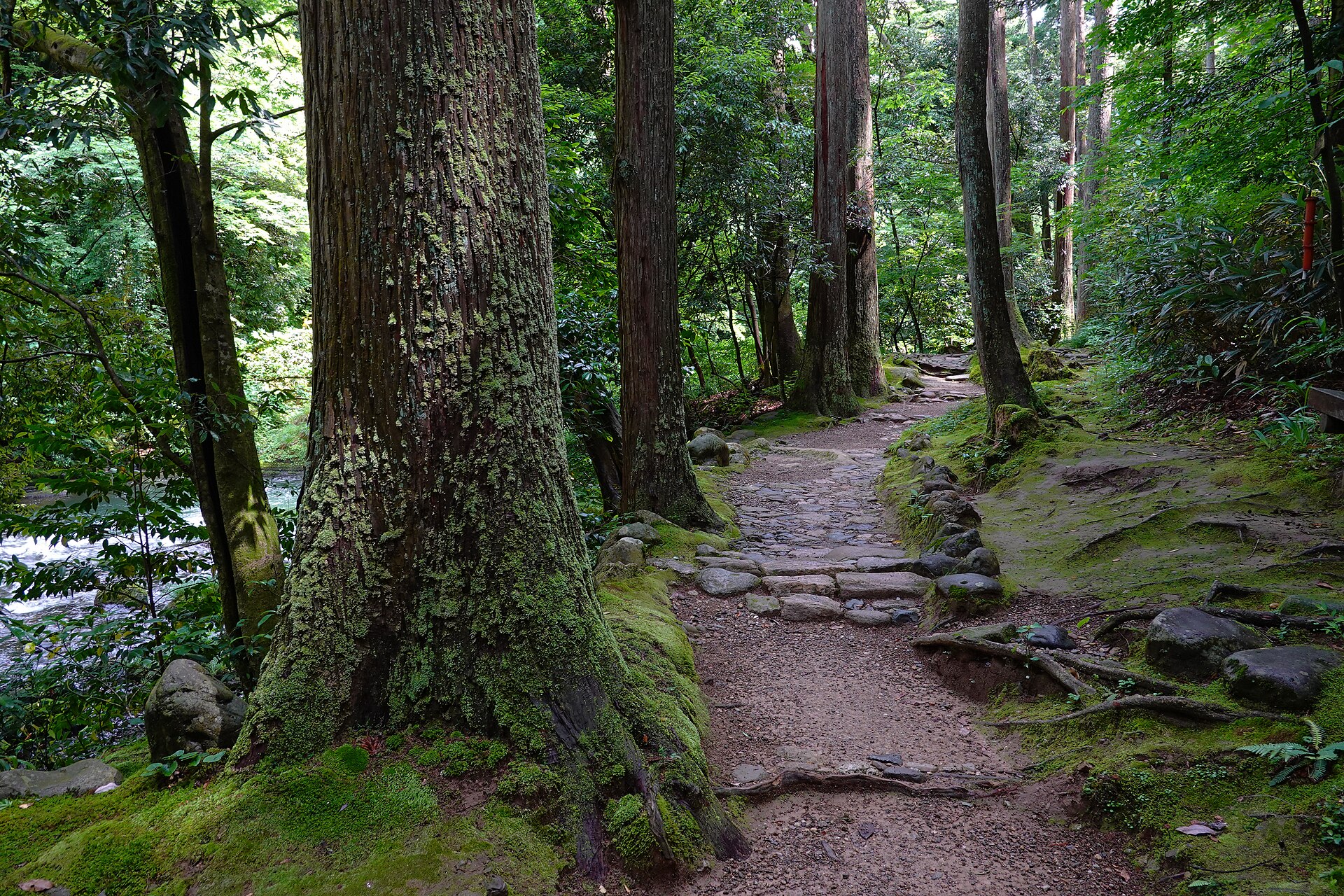
Yamanaka Onsen, the next village, is crossed by the Kakusenkei Gorge, 1.3 km between the Korogi and Kurotani bridges. The S-shaped Ayatori Bridge is lit in the evening from April until the end of the snow season, and the Basho-do hut commemorates the visit of the poet Matsuo Basho.
Bathing rules, from washing before getting in to keeping the small towel out of the water, are explained in the guide to onsen, ryokan and etiquette in Japan.
Getting to and from Kanazawa
- From Tokyo: Hokuriku Shinkansen to Kanazawa, about 2 h 30.
- From Kyoto or Osaka: Thunderbird limited express to Tsuruga, then the Hokuriku Shinkansen; about 2 h in total, with a compulsory change at Tsuruga.
- To Kaga Onsen: shinkansen to Kaga-Onsen, about 15 min, then about 10 min by taxi to Yamashiro.
- To Shirakawa-go and Takayama: express bus to Shirakawa-go, about 1 h 30, then about 50 min on to Takayama; the Hida, Takayama and Shirakawa-go page covers the next stage.
- By air: Komatsu Airport is 10 km from Beniya Mukayu.
JR West, one of the Japan Railways companies, sells a Kansai-Hokuriku regional pass that covers Kyoto, Osaka and Kanazawa; the guide to trains and the Japan Rail Pass compares the passes.
When to visit Kanazawa
The climate table, drawn from the 1991-2020 normals of the JMA (Japan Meteorological Agency), reads in four seasons. Highs climb from 12 °C in March to 17 °C in April and 22 °C in May; according to the same agency, Kanazawa's cherry trees start flowering around 3 April and reach full bloom around 8 April on average, a few days after Kyoto's. The Hokuriku rainy season runs on average from 11 June to 23 July; August reaches an average high of 31 °C. Autumn is mild, with 27 °C in September, 22 °C in October and 16 °C in November. From December to February highs stay between 7 and 10 °C: the season for ryokans and the baths of Kaga.
Where to stay in Kanazawa and Kaga
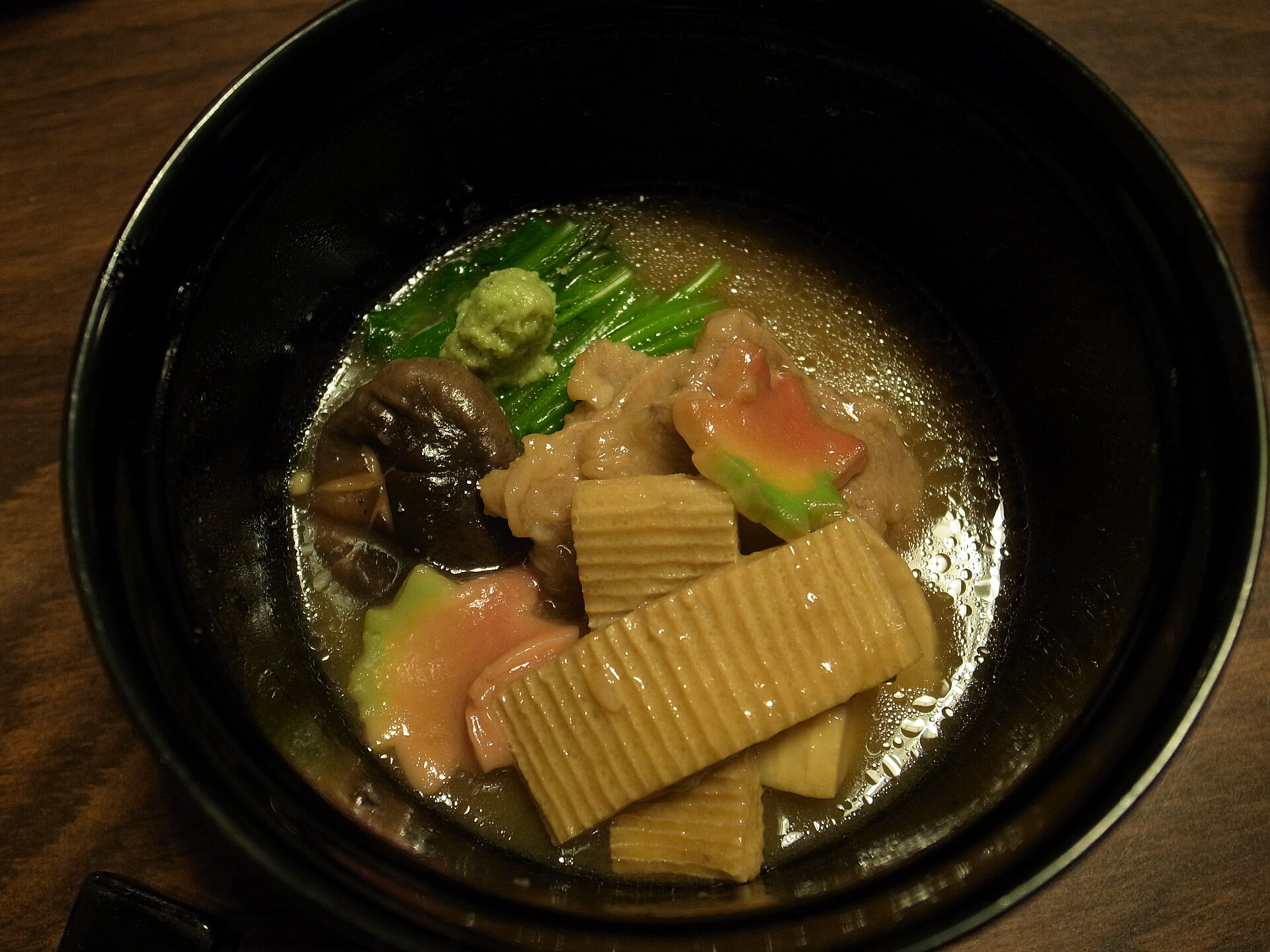
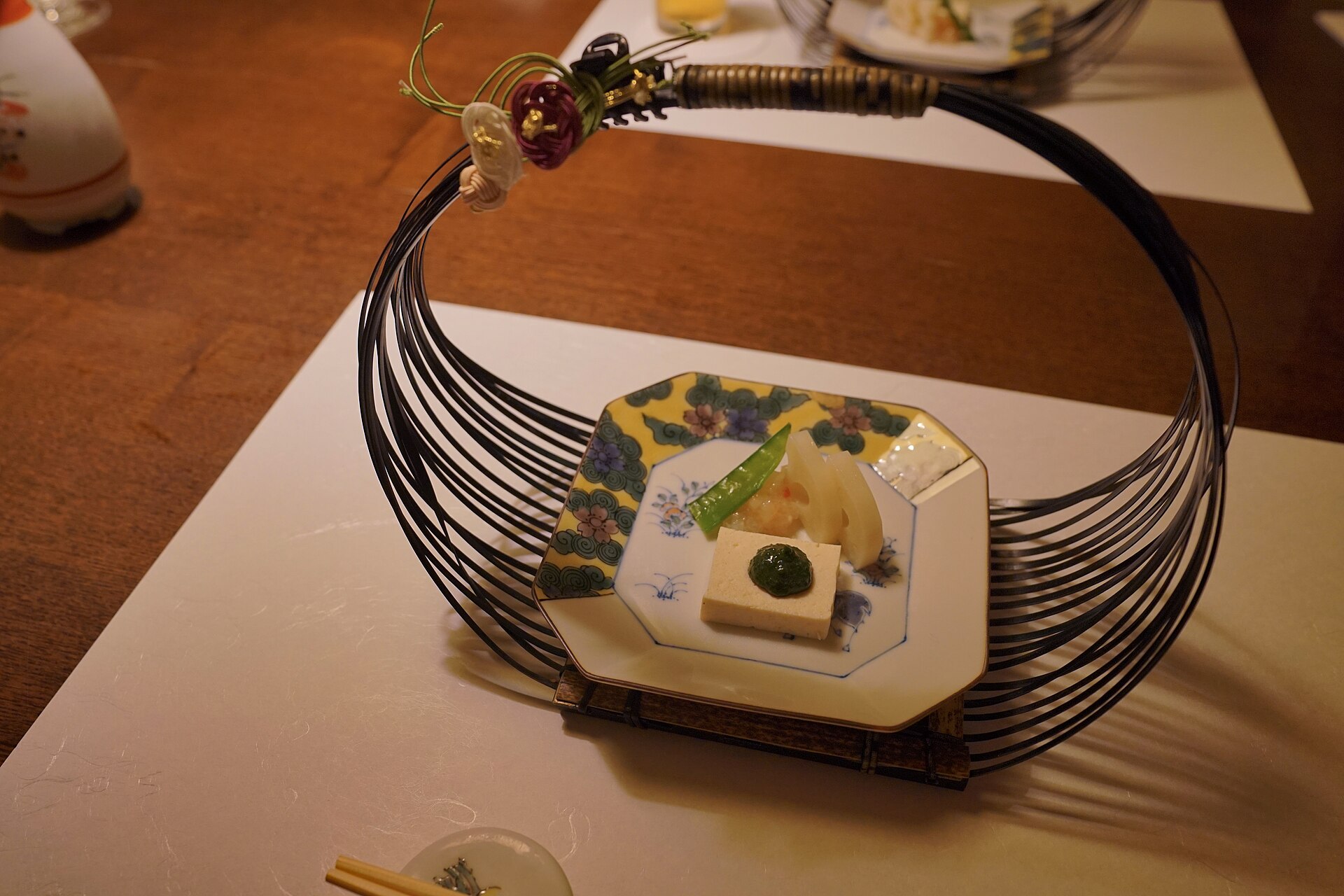
Kinjohro, in Kanazawa. Founded in 1890, Kinjohro is first of all a ryotei, a traditional restaurant serving kaiseki (a multi-course meal) of Kaga cuisine, which also lets six Japanese-style rooms. Each has its own bath in hinoki (Japanese cypress) or granite, and three look onto the garden of the former residence of Maeda Tsushima-no-kami. The house stands on the Asano River, the starting point for walks to Kazue-machi and Higashi Chaya, 12 minutes by bus from Kanazawa Station.
Beniya Mukayu, in Yamashiro Onsen. This Relais & Châteaux ryokan has 16 rooms and suites, each with its own open-air onsen bath on a forest garden. It also has two shared baths with sauna, a spa using medicinal plants and three libraries. It takes children from age 7 and holds a Michelin Key.
KAI Kaga, in Yamashiro Onsen. This 48-room ryokan of Hoshino Resorts' KAI brand faces the Ko-Soyu public bath. Its baths are decorated with Kutani porcelain, kaiseki dinner is served at 5.30 pm or 7.30 pm, and the staff perform the Kaga lion dance every evening. Children are welcome, and the FA4 room sleeps up to four.
The Kanazawa, Shirakawa-go and Takayama in 10 days itinerary includes three nights at Kinjohro.
What to see
- Kenrokuen Garden — garden open daily, 7 am-6 pm from 1 March to 15 October and 8 am-5 pm from 16 October to the end of February; admission ¥320; free early-morning entry through the Hasuike-mon and Zuijinzaka gates, from 4 am between April and August Préfecture d'Ishikawa, jardin Kenrokuen, informations pratiques
- Higashi Chaya teahouse district — streets of wooden teahouses (chaya); shops selling gold-leaf (kinpaku) objects, a Kanazawa speciality, with the Yasue Gold Leaf Museum nearby JNTO (office national du tourisme japonais), Kanazawa
- Nagamachi samurai district — former samurai quarter near Kanazawa Castle Park, with the Nomura samurai house JNTO (office national du tourisme japonais), Kanazawa
- Myoryu-ji, the 'Ninja Temple' — temple founded in 1643 by the Maeda family as a defensive outpost: two storeys from outside, four inside, with trapdoors, hidden rooms and secret stairways; guided tours only, booking required; 9 am-4 pm; ¥1,200 Ishikawa Travel (office du tourisme de la préfecture d'Ishikawa), Myōryū-ji
- 21st Century Museum of Contemporary Art — museum opened in 2004; closed from 6 May 2027 to March 2028, the planned reopening date; the Swimming Pool work is viewed by reservation 21st Century Museum of Contemporary Art, Kanazawa, informations
- D. T. Suzuki Museum — museum devoted to the Zen Buddhist thinker D. T. Suzuki, designed by architect Yoshio Taniguchi; 9.30 am-5 pm, closed Mondays; ¥310 Ishikawa Travel, musée D. T. Suzuki
- Kakusenkei Gorge (Yamanaka Onsen) — 1.3 km gorge between the Korogi and Kurotani bridges, running through the hot-spring village of Yamanaka; S-shaped Ayatori Bridge, lit up in the evening from April until the end of the snow season; Basho-do hut commemorating the poet Matsuo Basho's visit Ishikawa Travel, gorge de Kakusenkei
- Yamashiro Onsen and the Ko-Soyu bathhouse — Kaga hot-spring village whose spring is said to have been found more than 1,300 years ago; in the centre, the Ko-Soyu public bath recreates an old-style bathhouse, with Kutani porcelain tiles and no showers Ishikawa Travel, Yamashiro Onsen
When to go
Climate in Kanazawa
| Jan | Feb | Mar | Apr | May | Jun | Jul | Aug | Sep | Oct | Nov | Dec | |
|---|---|---|---|---|---|---|---|---|---|---|---|---|
| Max. (°C) | 7.1 | 7.8 | 11.6 | 17.3 | 22.3 | 25.6 | 29.5 | 31.3 | 27.2 | 21.8 | 15.9 | 10.2 |
Source: JMA (agence météo japonaise), normales 1991-2020 de la station de Kanazawa (47605) — 1991-2020, accessed 30 October 2026
Getting there
- From Tokyo: Hokuriku Shinkansen to Kanazawa, about 2 h 30 JNTO (office national du tourisme japonais), Kanazawa
- From Kyoto or Osaka: Thunderbird limited express to Tsuruga, then Hokuriku Shinkansen; about 2 h in total, with a change at Tsuruga JNTO (office national du tourisme japonais), Kanazawa
Chosen activities
- Tea ceremony in the Saisetsu-tei teahouse at Gyokusen-en Garden, garden admission included, booking 3 days ahead — booked slot · from 29 € per person
Public price collected on: Gyokusen-en, cérémonie du thé — accessed 30 October 2026
- Geiko performance in a teahouse (Higashi, Nishi or Kazue-machi), with tea and sweets, on Saturdays from May 2026 to March 2027 — about 1 hour · from 29 € per person
Public price collected on: Visit Kanazawa (office du tourisme de Kanazawa), Kanazawa Geiko Experience — accessed 30 October 2026
Best months to go
Itineraries through this region
- Tokyo, Toranomon · 2 nights
- Kanazawa · 3 nights
- Hida, Takayama (via Shirakawa-go) · 2 nights
- Kyoto, Higashiyama · 2 nights
Hotels chosen in the region
| Hotel | Category | Suits | Guest rating | Indicative price |
|---|---|---|---|---|
| Beniya Mukayu | Luxury ryokan, 16 rooms with private open-air hot spring baths, Relais & Châteaux | Ryokans, Onsen and hot springs, Food and gastronomy, Art, architecture and design | 4,5/5 (Google) | from 1,176 € per night |
| KAI Kaga | KAI hot spring ryokan, 48 rooms, Kaga crafts | Ryokans, Onsen and hot springs, Food and gastronomy, Family | 4,1/5 (Google) | from 248 € per night |
| Kinjohro | Ryokan and ryōtei (traditional kaiseki restaurant) founded in 1890, 6 rooms | Ryokans, Food and gastronomy | 4,4/5 (Google) | from 931 € per night |
Read next
- When to go to Japan: cherry blossoms, rainy season, typhoons and autumn leaves
- Japan entry requirements: passport, Visit Japan Web, medicines and customs
- Onsen, ryokan and etiquette in Japan: bathing, tattoos, temples and dining
- Money in Japan: yen, cash machines, tax-free shopping and accommodation taxes
- Trains in Japan: shinkansen, Japan Rail Pass, seat reservations and IC cards
- Kanazawa, Shirakawa-go and Takayama in 10 days
Frequently asked questions
How many days should you spend in Kanazawa?
Two or three nights cover Kenrokuen, Higashi Chaya, Nagamachi, Myoryu-ji and the museums. One more night in a ryokan in Yamashiro Onsen, 15 minutes away by shinkansen and then 10 minutes by taxi, rounds off the stay.
How do you get from Kyoto to Kanazawa?
The Thunderbird limited express runs from Kyoto to Tsuruga, where you change to the Hokuriku Shinkansen for Kanazawa. The journey takes about 2 h in total, with a compulsory change at Tsuruga.
Is the 21st Century Museum of Contemporary Art open?
It closes from 6 May 2027 until March 2028, the planned reopening date. Until 6 May 2027 it is open, and the Swimming Pool work can be seen by reservation.
Can you see geiko in Kanazawa?
Yes: on Saturdays from May 2026 to March 2027, a geiko performance of about an hour, with tea and sweets, is held in a teahouse in Higashi, Nishi or Kazue-machi.
How can you see Kenrokuen without the crowds?
Go in early, free of charge, through the Hasuike-mon and Zuijinzaka gates: from 4 am between April and August, 5 am in March, September and October, and 6 am from November to February, local time. You must enter before the early window ends, 15 minutes before paid opening.
Which ryokans should you choose in Kaga Onsen?
Umika selects two ryokans in Yamashiro Onsen: Beniya Mukayu, 16 rooms with a private open-air hot-spring bath, children from age 7, and KAI Kaga, 48 rooms facing the Ko-Soyu public bath, which welcomes children.
A travel advisor replies by email. Free, no commitment.