Villages and countryside
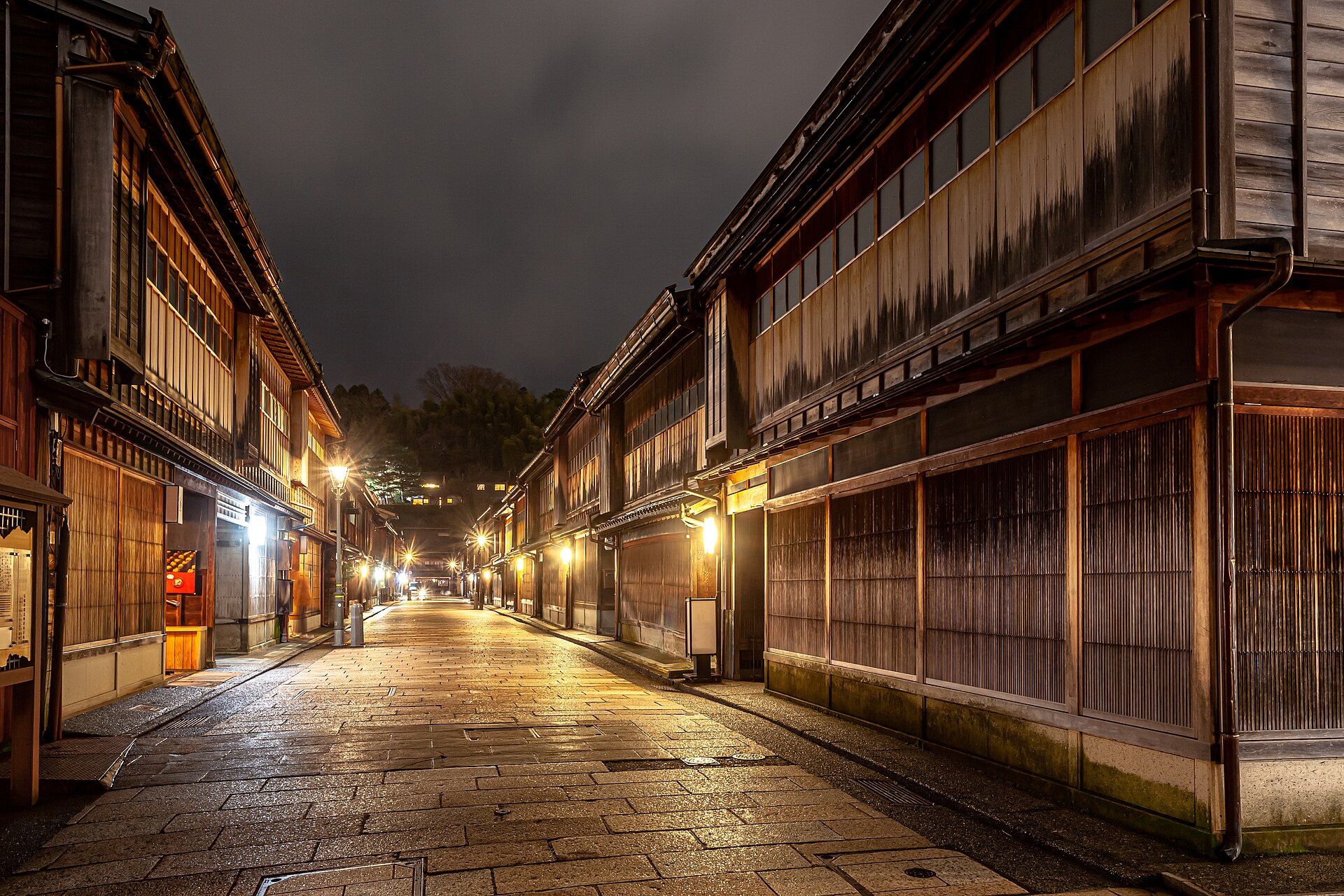
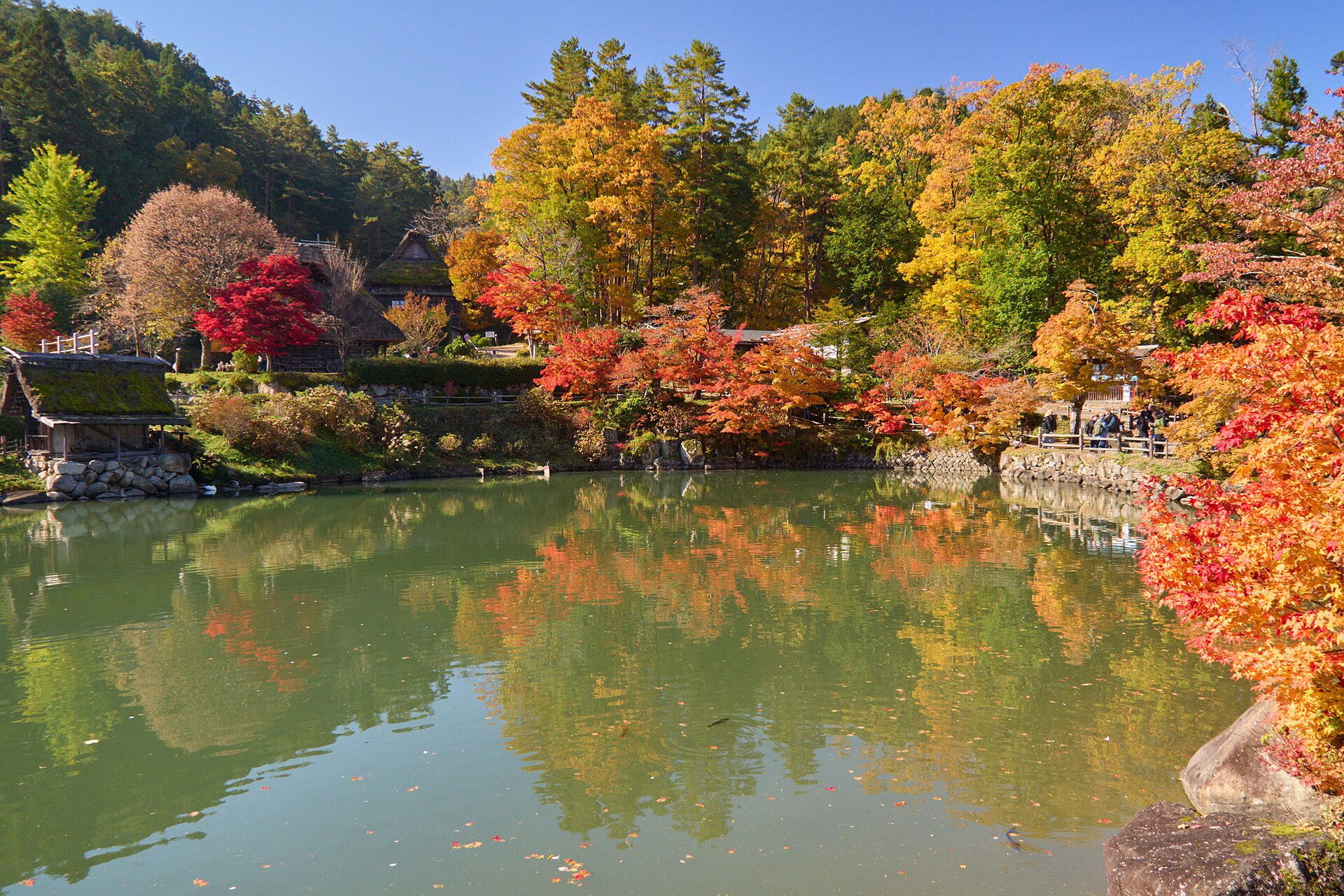
Village Japan is found in Shirakawa-gō, whose thatched gasshō-zukuri farmhouses have been a World Heritage Site since 1995, in Takayama, an old merchant town in the Hida mountains, in Setoda, a port on the Seto Inland Sea, and in the hot spring villages of Yamashiro, Yamanaka and Hirayu. You sleep in old houses: Wanosato near Takayama, Azumi Setoda, Beniya Mukayu and KAI Kaga in Kaga, and KAI Okuhida.
Hotels chosen by Umika
Japan
 Azumi SetodaSeto Inland Sea: Naoshima, Teshima, Setodafrom 795 € per night
 Beniya MukayuKanazawa and Kaga Onsenfrom 1,176 € per night
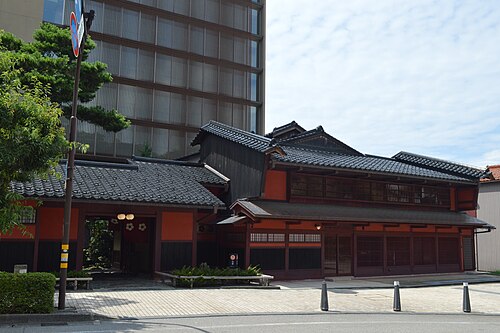 KAI KagaKanazawa and Kaga Onsenfrom 248 € per night
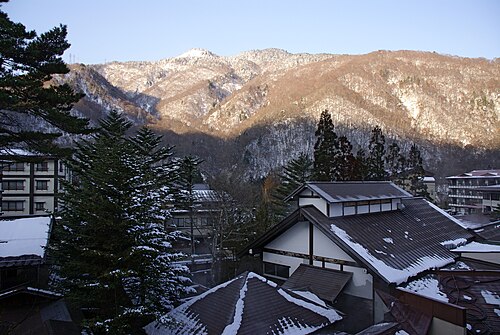 KAI OkuhidaHida: Takayama and Shirakawa-gofrom 281 € per night
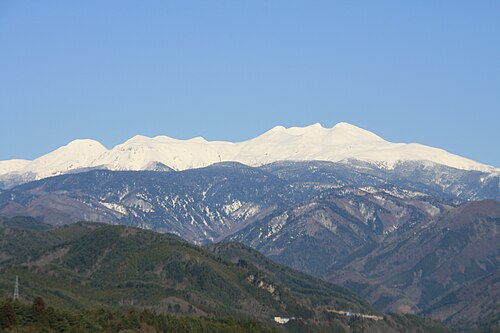 WanosatoHida: Takayama and Shirakawa-gofrom 695 € per night
Regions
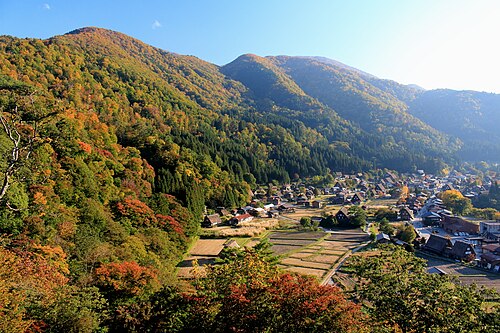 Hida: Takayama and Shirakawa-goA mountain merchant town, its float festivals and the thatched farmhouses of Shirakawa-go
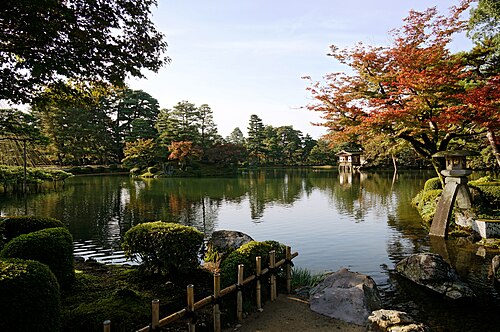 Kanazawa and Kaga OnsenKenrokuen Garden, the geiko teahouse districts and the hot-spring villages of Kaga
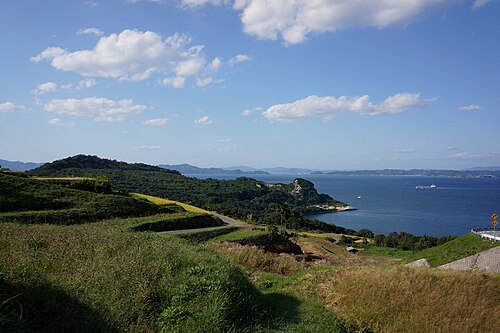 Seto Inland Sea: Naoshima, Teshima, SetodaTadao Ando's museums on Naoshima, the Teshima Art Museum and the Guntû cruise
Trip ideas
To see village Japan, plan two or three nights in the Hida region, between the thatched village of Shirakawa-gō and the old merchant town of Takayama, one or two nights in a hot spring village in Kaga or Okuhida, and two nights in Setoda, a port on an island in the Seto Inland Sea. Umika's selection puts its travellers up in old houses: gasshō-zukuri villas and a 160-year-old farmhouse at Wanosato, a shipowners' mansion of 1876 at Azumi Setoda, and ryokans, traditional Japanese inns, in the hot spring villages. These stops suit a second trip, or a first one that links Tokyo and Kyoto by way of the Sea of Japan coast.
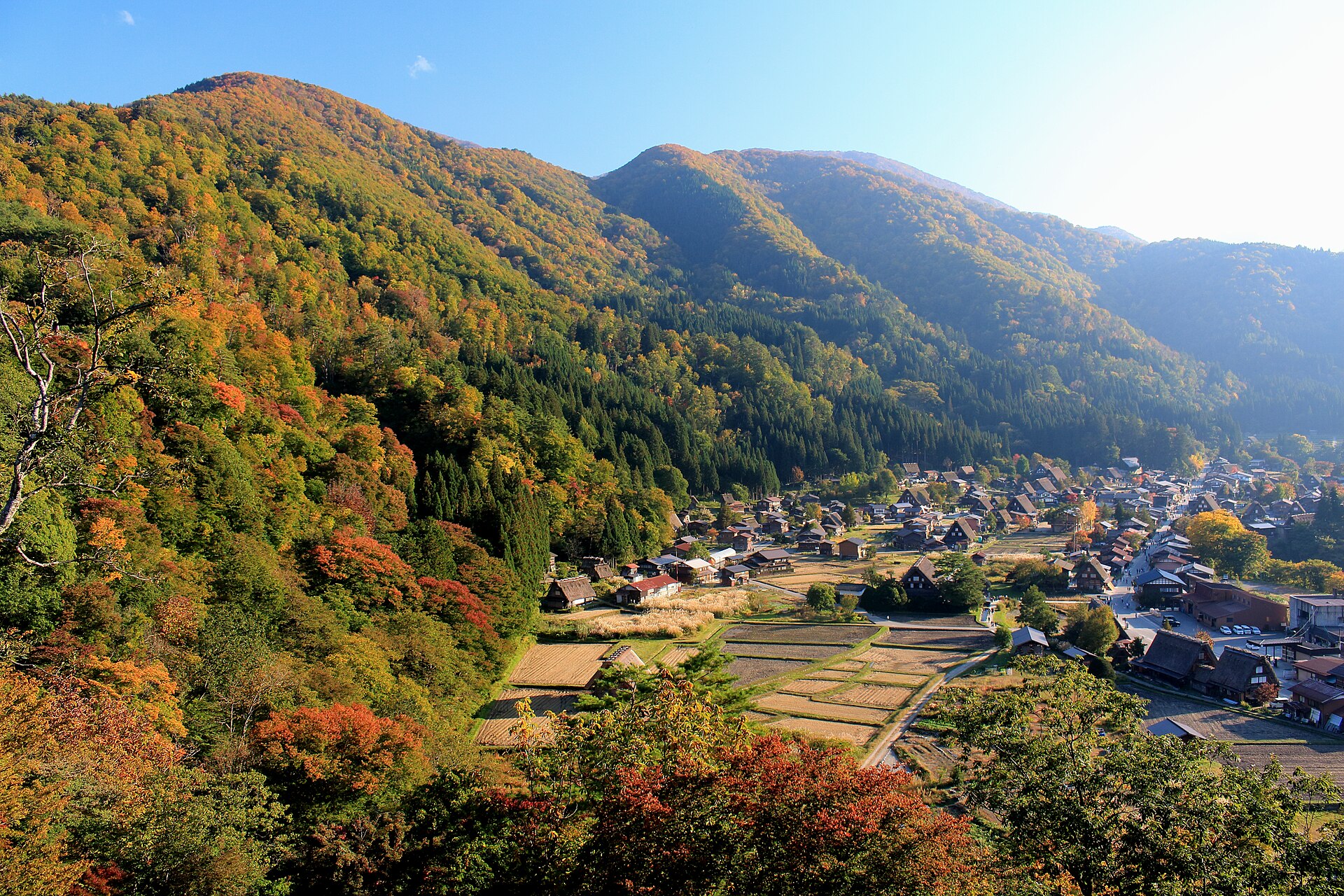
Shirakawa-gō and its gasshō-zukuri farmhouses
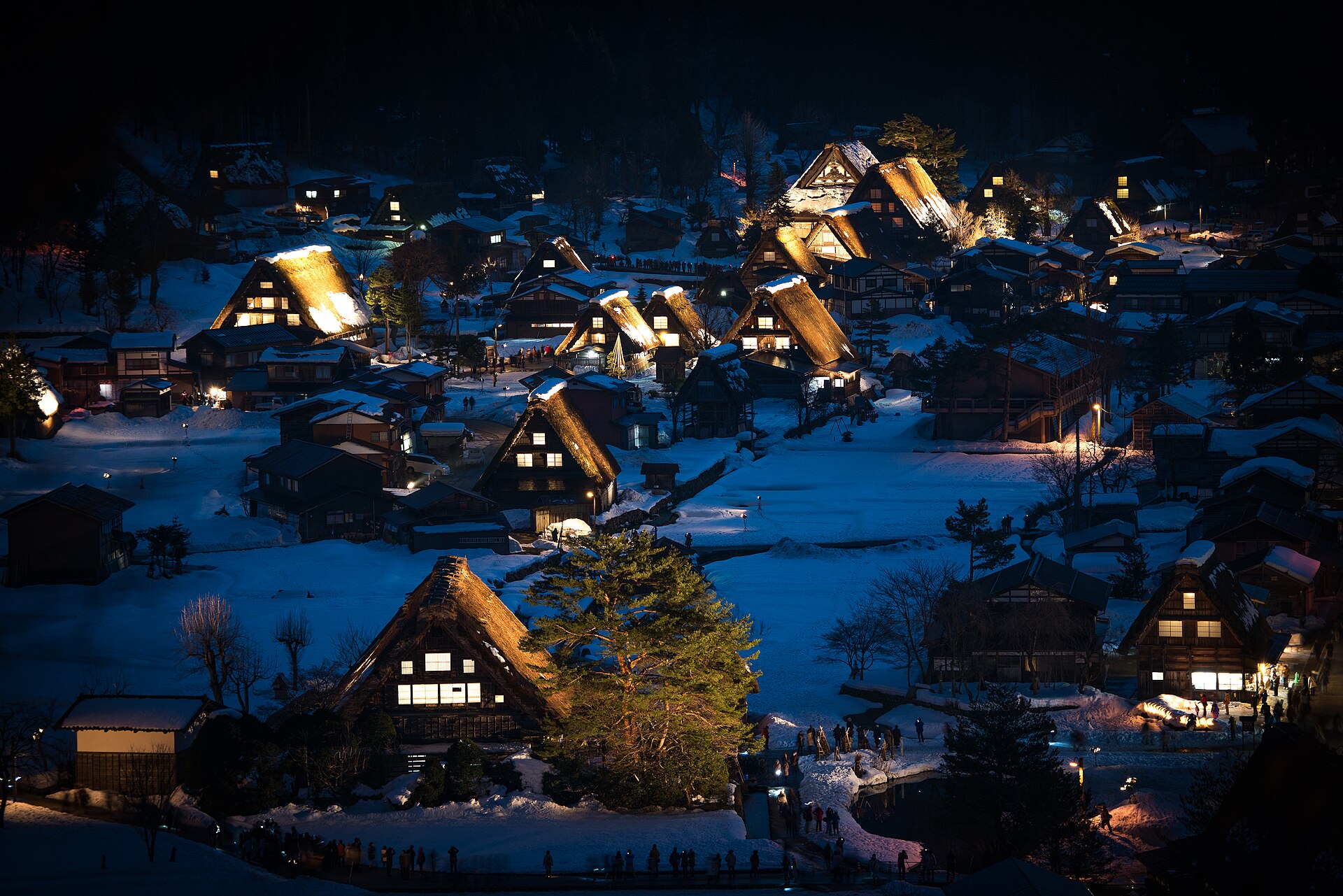
Shirakawa-gō keeps more than 100 gasshō-zukuri buildings, large farmhouses with steep thatched roofs; according to Toyama Prefecture, the name comes from the shape of the roof, which recalls hands pressed together in prayer. The frames are held together with rope and witch-hazel wood, without nails, which gives them the flexibility to carry the winter snow. The village of Ogimachi, in Shirakawa-gō, was inscribed as a UNESCO World Heritage Site in 1995 together with two villages of Gokayama, in neighbouring Toyama Prefecture: Ainokura, with some twenty gasshō-zukuri houses, and Suganuma, with nine. In the Edo period, the Kaga domain had them produce saltpetre and washi paper and raise silkworms, fed from mulberry fields that gave way to rice paddies in the mid-20th century.
Shirakawa-gō is about 50 minutes by express bus from Takayama station and 1 hour 30 minutes from Kanazawa: it is visited on the way between the two towns. The Kanazawa-Takayama bus, run by Hokutetsu and Nōhi Bus, costs 2,800 ¥ (about 16 €) per section, and some services must be booked. A few hours are enough to walk round the village.
Several rules apply:
- rooms in the farmhouses offered by the tourist office are allocated by ballot; a night in the village lets you see it after the day visitors have left;
- in 2027, the winter illumination takes place on 11, 17, 24 and 31 January, with accommodation and parking by reservation only;
- from 1 December 2026, tour coaches park at the main car park by reservation.
Takayama, the mountain merchant town
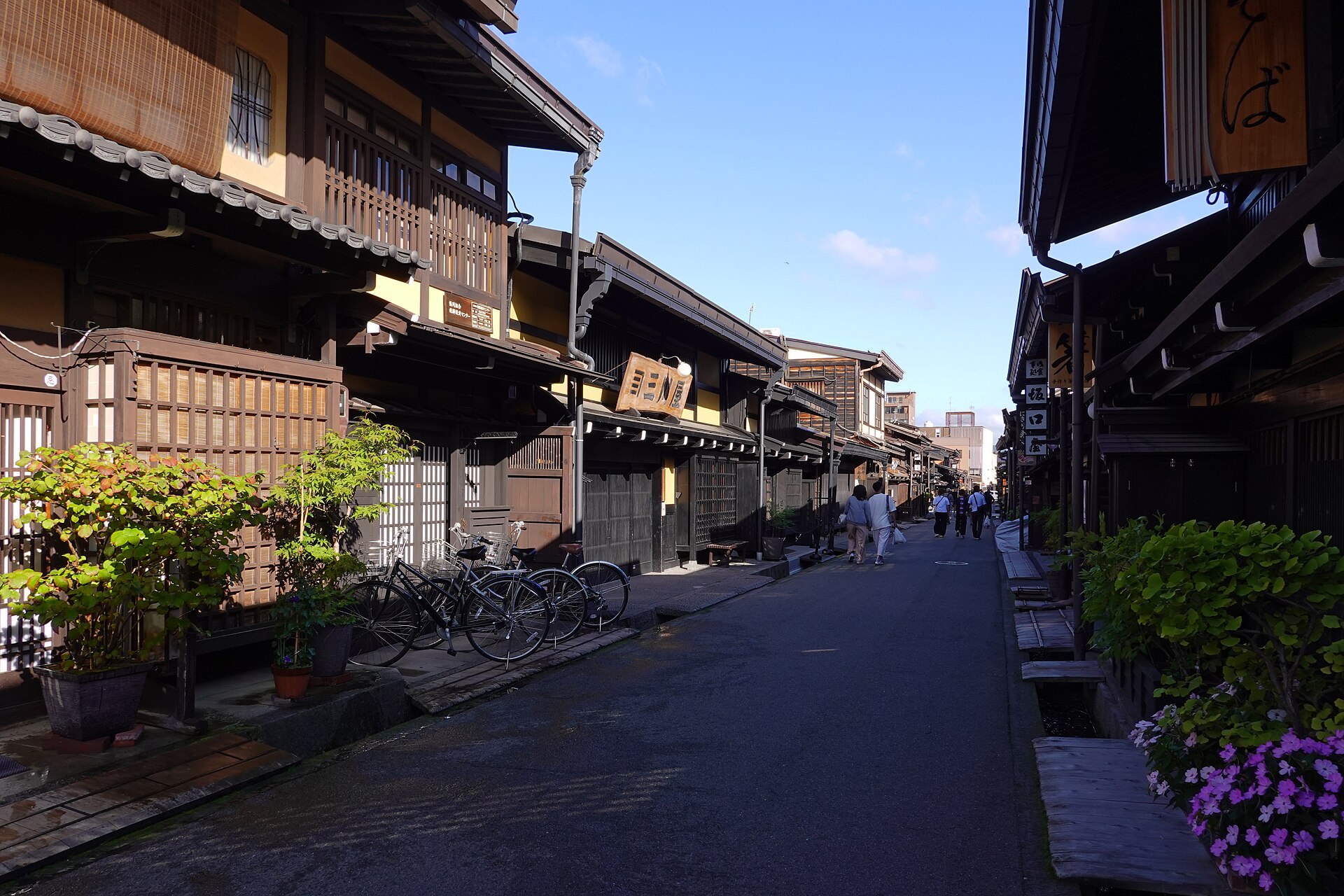
Takayama is 2 hours 20 minutes from Nagoya on the Hida limited express. Its old town, Sanmachi, is a protected former merchant quarter: latticed wooden façades, clear-water channels, and sake breweries marked by a ball of cedar leaves. Takayama Jinya, the former office of the shogunate's administration, opens from 8.45am for 500 ¥ (about 3 €); you walk on tatami, rice-straw mats, in unheated rooms. Hida no Sato, an open-air village museum of more than 30 buildings, including thatched farmhouses, costs 700 ¥ (about 4 €) and is a good introduction to Shirakawa-gō, especially with children.
Two float festivals take place on fixed dates:
| Festival | Dates | Shrine | Floats |
|---|---|---|---|
| Sannō Matsuri, spring | 14 and 15 April | Hie | 12 |
| Hachiman Matsuri, autumn | 9 and 10 October | Sakurayama Hachimangū | 11 |
On these four days the town is in high demand. Our Hida, Takayama and Shirakawa-gō page gives opening hours and journeys.
Sleeping in a Hida house
Wanosato, at Ichinomiya, south of Takayama, stands on a 45,000 m² estate on the Miya River, facing Mount Norikura. It rents four villas, including two 80 m² gasshō-zukuri houses with earthen walls and high ceilings, and a 120-year-old house moved and rebuilt on the estate, the only room with its own irori, the hearth sunk into the floor; three suites are in a 160-year-old farmhouse. After the kaiseki dinner, a seasonal Japanese meal of many courses, the inn gathers its guests round the hearth for Hida folk tales and kappo-zake, sake warmed in a length of bamboo. The shared thermal baths open from 2pm to 5.50pm and from 6.30am to 10am.
Three things to know: the shuttle leaves Takayama JR station at 2.20pm, 3.20pm and 4.20pm, booked 7 days ahead; in April, Tuesday and Wednesday nights are not sold; children are accepted from primary-school age, in the villas only. In winter, snow tyres are compulsory to drive there.
KAI Okuhida, opened in 2024 at Hirayu, at about 1,200 m, is built like a mountain village in miniature: buildings linked by lanes and a courtyard, a footbath fed by the spring, Shunkei lacquer and Hida-zome dyeing in every room. Of its 49 rooms, 28 have a private open-air onsen bath, fed by a natural hot spring. In winter, a guests-only shuttle serves Takayama station and Shirakawa-gō.
The hot spring villages
Three hot spring villages, each built around its spring, lie on our itineraries:
- Yamashiro Onsen, in Kaga, whose spring is said to have been found more than 1,300 years ago. At its centre, the Ko-Sōyu public bath recreates an old-style bathhouse, tiled with Kutani porcelain and without showers. KAI Kaga, with 48 rooms, faces it and welcomes children; Beniya Mukayu, with 16 rooms each with a private open-air thermal bath, is on the hill above the village, for children aged 7 and over.
- Yamanaka Onsen, the neighbouring village, crossed by the Kakusenkei gorge, 1.3 km between the Korogi and Kurotani bridges, with the S-shaped Ayatori bridge, lit in the evening from April to the end of the snow season.
- Hirayu, in Okuhida, at the foot of the Northern Alps; from Shinhotaka Onsen, another Okuhida village, the Shinhotaka Ropeway climbs to 2,156 m all year round, for 3,800 ¥ (about 22 €) return.
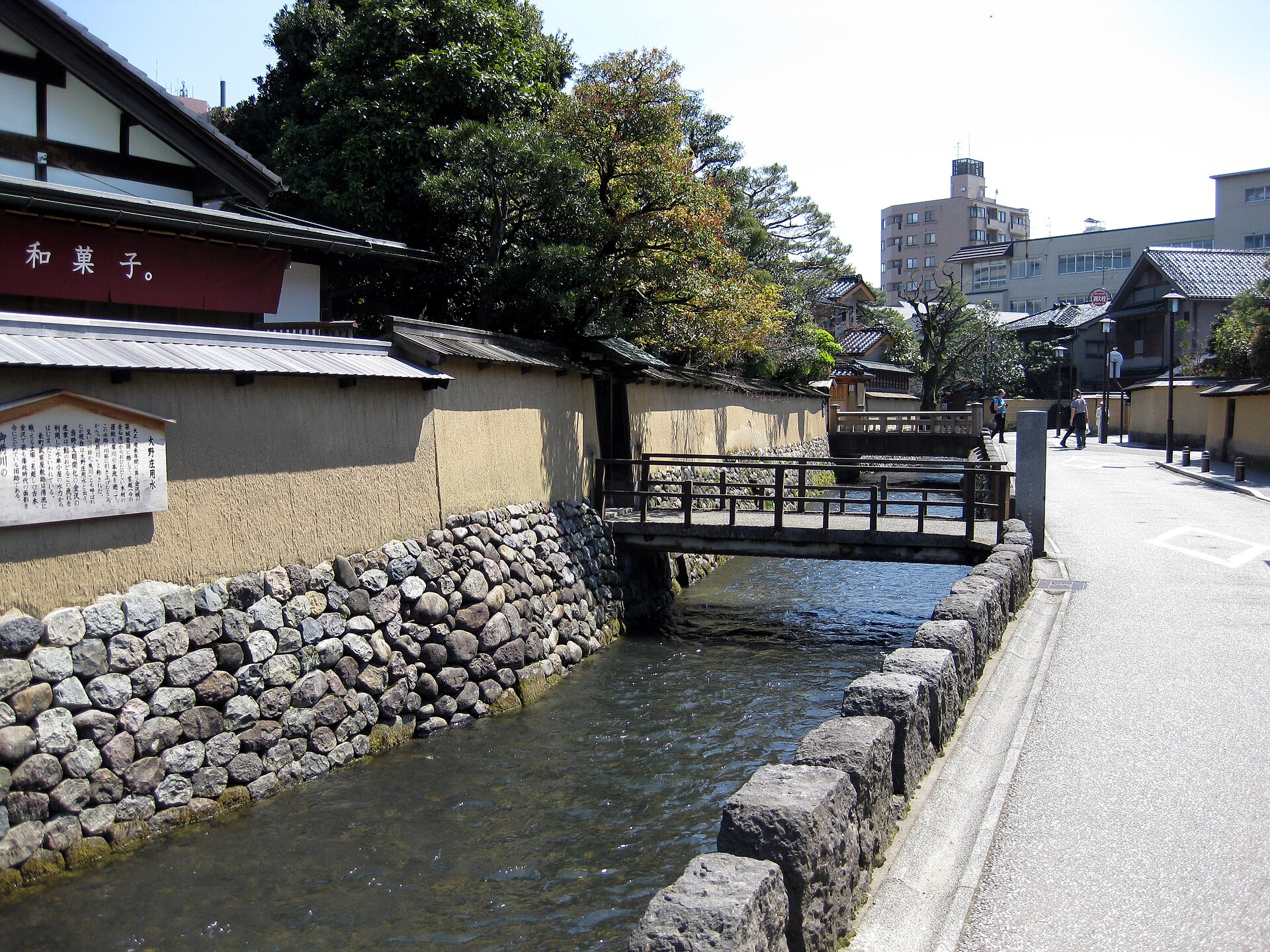
Kaga-Onsen is 15 minutes from Kanazawa by shinkansen, the bullet train, then 10 minutes by taxi; our Kanazawa and Kaga Onsen page describes the region, and our onsen, ryokan and etiquette guide explains how to bathe.
Setoda, an Inland Sea port
Setoda is a port of shipowners and salt makers on the island of Ikuchijima, 40 minutes by fast boat from Onomichi, on the Shimanami Kaidō island route. It is Japan's largest lemon producer. From the harbour you can walk to the three-storey pagoda of Kōjō-ji, built in 1432 and a National Treasure, to Kōsan-ji, a temple built by an Osaka businessman in honour of his mother, and to the museum of the painter Hirayama Ikuo, who was born in Setoda.
Azumi Setoda occupies the mansion built in 1876 by the Horiuchi family, shipowners and salt producers, restored by the architect Shiro Miura without reinventing it. Its rooms of 50 to 70 m² surround a courtyard closed by fences, each with a bath in hinoki, Japanese cypress. The hotel rents bicycles for the island route and offers lemon picking from October to early April; the yubune public bath opposite is free for guests. Dinner is not served on Tuesdays and Wednesdays. Our Seto Inland Sea page describes the neighbouring islands.
Choosing your village
| Stop | Nights | Hotel in the selection | Best for |
|---|---|---|---|
| Takayama and Shirakawa-gō | 2 | Wanosato | couples, children from primary-school age |
| Okuhida | 1 or 2 | KAI Okuhida | couples, families, mountains |
| Yamashiro Onsen | 1 or 2 | Beniya Mukayu, KAI Kaga | couples; families at KAI Kaga |
| Setoda | 2 | Azumi Setoda | couples, cycling |
The Kanazawa, Shirakawa-gō and Takayama in 10 days itinerary spends two nights at Wanosato after Shirakawa-gō; Kyoto, Miyajima and the art islands in 10 days spends two nights at Azumi Setoda.
Which season
Hida has a mountain climate: according to the Japan Meteorological Agency's 1991-2020 normals, Takayama's average maximum is 3.2°C in January, 17°C in April, 31°C in August and 20°C in October. Winter is the season of snow in Shirakawa-gō and of the January illumination; April and October are the months of the Takayama festivals. In Setoda, the lemon season runs from October to early April. Our seasons guide gives cherry blossom and maple dates for the nearby cities.
Frequently asked questions
Can you stay overnight in Shirakawa-gō?
Yes, in some of the village's gasshō-zukuri farmhouses; rooms offered by the tourist office are allocated by ballot, especially for the illumination on 11, 17, 24 and 31 January 2027. Umika puts its travellers up at Wanosato, near Takayama, which has two gasshō-zukuri villas.
How long do you need for Shirakawa-gō and Takayama?
Two or three nights: a few hours for Shirakawa-gō, on the way between Kanazawa and Takayama, a day for Sanmachi, Takayama Jinya and Hida no Sato, and a day in Okuhida for the baths and the Shinhotaka ropeway.
What is a gasshō-zukuri house?
It is a large farmhouse with a steep thatched roof, shaped like hands pressed together in prayer. The frames are assembled with rope and wood, without nails, so that they can carry the snow. Shirakawa-gō keeps more than 100, and the villages of Ainokura and Suganuma, in Gokayama, some twenty and nine.
Is Shirakawa-gō suitable for children?
Yes: the village is explored on foot, and the Hida no Sato village museum, in Takayama, shows thatched farmhouses with craft demonstrations. At Wanosato, children are accepted from primary-school age, in the villas; KAI Okuhida and KAI Kaga welcome children.
How do you get to Setoda?
By fast boat: 40 minutes from Onomichi, 25 minutes from Mihara. Setoda combines with Hiroshima and Miyajima, further west, or with Naoshima, further east, on the Seto Inland Sea.
A travel advisor replies by email. Free, no commitment.